Fat Bloom Pet Food And How It Impacts Product Quality
Fat Bloom Pet Food And How It Impacts Product Quality
When a thin, whitish layer appears on the surface of pet food, it often raises concern about spoilage or safety.
This coating, known as fat bloom, forms when natural fats in the food separate and solidify over time.
So what is fat bloom in pet food?
Fat bloom is a cosmetic change, not always a sign of poor quality or rancidity, but it can indicate how the food was processed, stored, or handled.
In dry and air-dried pet foods, fat bloom may make the surface appear slightly oily or waxy. This happens when temperature or moisture changes cause fat to migrate and crystallize.
While it can affect texture and appearance, it does not always mean the food has gone bad.
However, understanding its cause helps determine whether the food remains safe and palatable.
Learning how fat bloom form, its impact on nutrition and flavor, and how to prevent it gives pet owners confidence in maintaining their pets’ diets.
The following sections explore the science behind fat bloom, how to identify safe products, and what the industry is doing to control it.
Understanding Fat Bloom in Pet Food
Fat bloom occurs when fat naturally separates from the surface of pet food, often due to temperature changes, storage conditions, or the type of fat used in the recipe.
This physical change affects appearance and texture but usually does not mean the food is unsafe or spoiled.
Definition of Fat Bloom
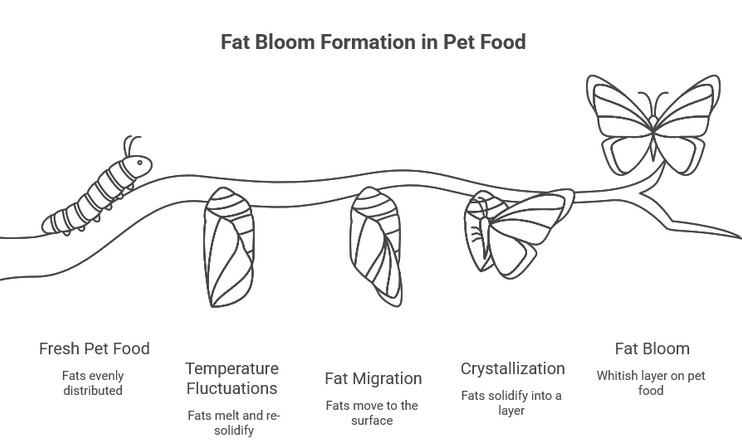
Fat bloom refers to the thin, whitish or oily coating that can appear on the surface of air-dried or freeze-dried pet food products. It forms when fat components migrate from within the food matrix toward the outer layer, where they solidify or crystallize.
This phenomenon is especially common in foods made with natural meat ingredients or high-fat formulations. Because these recipes do not always use synthetic stabilizers, natural fat can rise and settle unevenly.
Fat bloom differs from rancidity. Rancid fat results from oxidation and produces off-odors or unpleasant flavors, while fat bloom is a visual and textural change without a noticeable odor shift.
Understanding this distinction helps pet owners avoid discarding food that remains nutritionally sound.
How Fat Bloom Develops
Fat bloom develops when temperature fluctuations cause fat within pet food to melt and re-solidify at the surface.
Over time, exposure to warm or humid storage conditions accelerates this process. Repeated cycles of melting and cooling increase fat movement, leading to visible accumulation.
The type of fat used also matters.
Animal-based fats with higher levels of saturated content are more prone to solidifying into a visible layer. Manufacturers monitor free fatty acid (FFA) levels and oxidation rates to maintain quality and limit bloom formation.
Proper formulation and packaging help reduce fat migration. Using antioxidants, controlling storage temperatures, and evenly mixing ingredients prevent separation.
These factors are especially important for maintaining palatability and preserving texture in dry or semi-moist pet foods.
Visual and Textural Signs
Fat bloom appears as a thin white film, waxy layer, or slightly oily residue on the surface. It can feel greasy to the touch but often has no strong smell.
Pet owners may notice the coating more on darker kibble or dried meat treats.
Some products might show small clusters or streaks where fat has crystallized unevenly. This change may give the food a softer or heavier surface texture.
Unlike mold, the white coating of fat bloom does not spread or produce fuzzy growth.
Characteristic
Fat Bloom
Spoilage/Oxidation
Color
White or translucent
Yellow or brown
Smell
Neutral or mild
Sour, rancid, or off
Texture
Waxy, oily
Sticky, degraded
Safety
Safe to eat if within shelf date
Unsafe, discard
Recognizing these visual and tactile cues helps consumers identify harmless fat blooms and keep quality pet food from being wasted.
Causes of Fat Bloom on Pet Food
Fat bloom forms when fats within pet food re-crystallize or migrate to the surface, creating a dull or greasy appearance.
It often results from a mix of temperature shifts, production errors, and ingredient incompatibility that affect fat stability.
Storage Conditions
Storage temperature strongly influences fat bloom. Frequent temperature fluctuations cause fats to melt and re-solidify unevenly, leading to unstable crystal forms on the food’s surface.
When pet food, especially treats coated with fat or oils, sits in warm, humid air, the risk of bloom rises sharply.
Proper humidity control also matters. Moisture encourages sugar or fat movement within the product, distorting surface texture.
Packaging that limits air and moisture exposure helps reduce bloom formation.
A useful guide for storage:
Condition
Effect on Fat Bloom
Recommendation
High temperature variability
Promotes fat migration
Keep within 15–20°C
High humidity
Increases surface moisture
Use moisture barriers
Prolonged storage
Allows crystal growth
Rotate stock regularly
These practices slow fat crystallization changes, maintaining a stable product surface.
Manufacturing Processes
The cooling and tempering stages during production strongly affect fat structure. If cooling rates are uneven, fats may not form the intended stable crystals, leading to re-crystallization later.
In products using fat coatings, poor tempering can leave fats unstable and more prone to migrating outward.
Mechanical handling also contributes. Overmixing or rough particle grinding can disturb the natural fat distribution in kibble or coating materials. Equipment that retains residual heat can inadvertently melt fats at the surface, starting bloom formation as the product cools.
Consistent processing temperature control helps prevent bloom. Manufacturers often monitor cooling tunnels and surface temperatures to ensure each batch forms uniform, stable crystals before packaging.
Ingredient Interactions
Different fats have varying melting points and crystal structures. When incompatible fats—such as poultry fat combined with plant-based oils—are blended without care, migration occurs as one fat type moves through another.
This imbalance leads to surface bloom during storage.
Free fatty acids (FFAs) also play a role. High FFA levels, often from aged or poorly stored ingredients, can disrupt fat crystallization and accelerate blooming. Using fresh, well-refined fats lowers this risk.
To maintain stability, formulators may use emulsifiers or antioxidants to keep fats evenly dispersed and delay oxidation that affects texture and appearance.
Balanced ingredient selection and controlled composition ensure product consistency over time.
Impact of Fat Bloom on Pet Food Quality
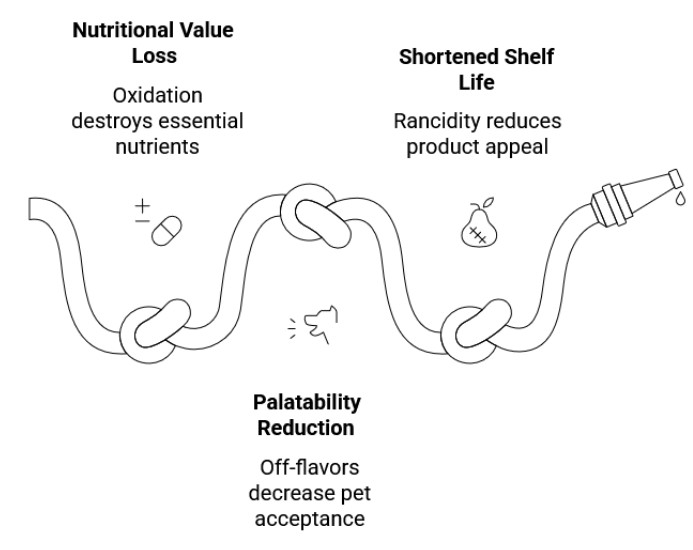
Fat bloom changes the physical appearance, nutrient stability, and flavor of pet food. These changes can reduce the product’s nutritional efficiency, lower palatability, and shorten its selling life if not managed correctly.
Nutritional Value
Fat bloom often signals changes in the structure of fats used to coat kibble or treats. When fats migrate to the surface, they can oxidize quickly. This oxidation lowers energy content and may destroy sensitive vitamins such as A and E.
Manufacturers monitor free fatty acids (FFAs) and oxidation levels because both affect nutrient stability. Elevated FFAs point to degraded fat sources or poor storage conditions. Pet foods showing these signs may offer less usable fat and fewer essential fatty acids.
Maintaining fresh, well-preserved fats helps retain nutrient quality. Proper antioxidant application and temperature control limit oxidation.
A consistent fat layer also improves nutrient absorption and energy value, keeping diets closer to their intended composition.
Palatability for Pets
Pets notice the changes caused by fat blooming. Fresh fats enhance aroma and taste, while oxidized or rancid layers create off-flavors.
Cats generally react more sharply to these flavor shifts, while dogs may tolerate mild oxidation but still show reduced enthusiasm over time.
Producers test flavor impact through controlled feeding trials. These tests reveal that even slight surface oxidation lowers food acceptance rates.
The texture may also change, with a dry or greasy feel that affects mouthfeel and odor release.
Key methods to preserve palatability include:
Using fresh, stable fat sources.
Applying antioxidants at the right time and concentration.
Limiting exposure to heat, light, and air.
Product Shelf Life
Fat bloom reduces both visual and chemical stability. It creates dull or whitish surfaces that signal fat movement or oxidation.
While the food may remain safe, consumers often associate this look with spoilage.
As fats break down, rancidity develops, shortening shelf life. Oxidized fat not only affects smell and flavor but can also produce harmful compounds over time. Monitoring fat quality and rotation schedules helps control this problem.
Manufacturers often use packaging that limits oxygen and moisture.
Consistent temperature during storage and transport further slows fat migration, preserving the intended shelf life and product appeal.
Prevention and Control of Fat Bloom
Reducing fat bloom in pet food depends on how fats are stored, combined, and handled before and after processing.
Consistent temperature control, stable formulations, and careful packaging reduce the risk of visible fat separation and surface whitening.
Best Practices for Storage
Temperature and humidity stability are critical for avoiding fat bloom. Sudden changes can cause fats to crystallize unevenly or migrate to the surface.
Keeping storage areas between 15°C and 20°C (59°F–68°F) with low relative humidity helps maintain product appearance and freshness.
Using airtight packaging protects against moisture and oxygen exposure that accelerate fat oxidation.
Facilities should rotate stock regularly using the first-in, first-out system to keep older materials from degrading. A simple checklist helps maintain control:
Factor
Recommended Control
Temperature
Keep within 15–20°C
Humidity
Below 60% relative humidity
Light exposure
Store away from direct light
Regular quality checks detect early signs of bloom before the product leaves storage.
Formulation Adjustments
Choosing the right blend of fats and antioxidants can lower the chance of bloom. Fat composition, especially the ratio of saturated to unsaturated fats, affects how easily they separate or crystallize during storage.
Nut or animal-based fats with higher free fatty acids can speed up bloom formation if not stabilized.
Adding 5–6% cocoa butter or similar stable fats to high-fat coatings or fillings can improve crystal structure and reduce migration. Pre-crystallizing fats during mixing ensures uniform crystal formation.
Antioxidants such as tocopherols or rosemary extract may also extend shelf life without affecting palatability.
Producers should test new formulas under varying temperature and time conditions to confirm stability.
Handling During Transportation
Transportation exposes pet food to vibration, heat, and long transit times. These factors can disturb fat distribution and cause bloom after arrival.
Trucks and containers should maintain controlled temperatures, avoiding cycles of melting and resolidifying fats.
It helps to use insulated or temperature-monitored vehicles for long-distance shipments. Pallets should not sit against walls or under direct sunlight where heat builds up.
During unloading, staff should inspect for oil migration or surface dullness.
Keeping detailed records of transport conditions allows producers to trace and adjust handling practices that lead to visible bloom.
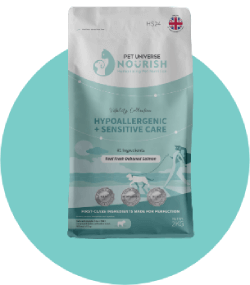
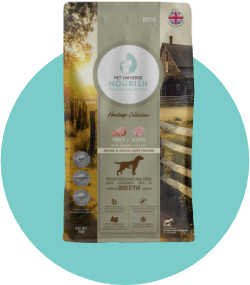
How Nourish Pet Universe Ensures Fat Bloom Prevention
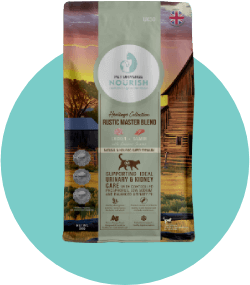
At Pet Universe Nourish, we understand that as a responsible pet owner, you want assurance that every bag of pet food you purchase maintains its nutritional integrity, freshness, and quality from our facility to your pet’s bowl.
That’s why we’ve implemented comprehensive measures throughout our manufacturing and distribution process to prevent fat bloom and preserve the excellence your pet deserves.
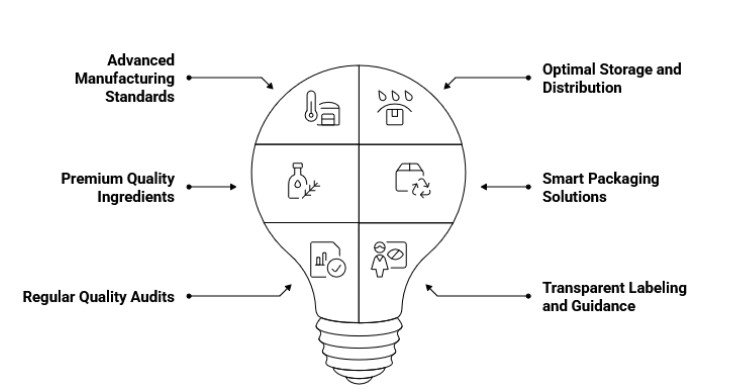
Advanced Manufacturing Standards
At Nourish, our state-of-the-art manufacturing facilities utilize temperature-controlled environments and precise formulation techniques to minimize the risk of fat bloom.
We carefully balance fat content in our recipes to ensure optimal nutrition while maintaining product stability.
Each batch undergoes rigorous quality testing before it reaches our shelves, guaranteeing that only products meeting our strict standards bear the Nourish Pet Universe name.
Optimal Storage and Distribution
We maintain climate-controlled warehouses that keep our pet food at ideal temperatures throughout storage and distribution.
Our inventory management system follows the FIFO (First In, First Out) principle, ensuring that the freshest products are always available to our customers.
Additionally, we work closely with our logistics partners to minimize temperature fluctuations during transportation across Malaysia.
Premium Quality Ingredients
By sourcing only high-quality fats and oils from trusted suppliers, we ensure better stability and reduced susceptibility to fat bloom.
Our ingredient selection process prioritizes freshness and proper handling, which directly translates to longer-lasting quality in the final product your pet enjoys.
Smart Packaging Solutions
All Nourish Pet Universe products come in specially designed packaging that includes moisture barriers, UV protection, and resealable features to maintain freshness after opening.
Our packaging is engineered to protect against environmental factors that contribute to fat bloom, keeping your pet’s food in optimal condition.
Regular Quality Audits
Our commitment to excellence doesn’t end at manufacturing. We conduct regular quality audits of our retail locations and storage facilities to ensure proper handling practices are maintained.
Our team is trained to recognize and address any storage issues promptly, so you can shop with confidence.
Transparent Labeling and Guidance
Every Nourish Pet Universe product features clear storage instructions, best-before dates, and proper handling guidelines.
We believe in empowering our customers with the knowledge they need to maintain their pet food’s quality at home, completing the circle of care from our facility to your pet.
When you choose Nourish Pet Universe, you’re not just buying pet food—you’re investing in a complete quality assurance system designed to deliver optimal nutrition with every serving.
Identifying Safe vs. Unsafe Fat Bloom
Small white spots or patches on dried pet food can come from harmless fat bloom or from spoilage.
The difference lies in how the food looks, smells, and feels, along with how it has been stored or exposed to air and moisture.
Understanding these signs helps pet owners make informed choices about food safety.
Assessing Product Integrity
Fat bloom forms when natural fats in air‑dried or baked pet foods separate and rise to the surface.
It often creates a thin, white film or faint powdery coating.
Safe fat bloom usually feels smooth or waxy, with no odor change. It melts slightly under warmth, leaving behind the food’s original color.
Unsafe coatings may appear fuzzy, damp, or uneven in texture. Spoiled food can smell rancid, sour, or musty—clear signs of fat oxidation or mold growth.
Checking other details helps confirm safety of the products:
Indicator
Safe Fat Bloom
Unsafe or Spoiled
Odor
Normal or mild fat scent
Sour, rancid, or chemical
Texture
Dry, smooth, or powdery
Sticky, soft, or fuzzy
Color change
White or off‑white film
Green, gray, or spotted discoloration
If the food meets safe characteristics and the product is within its shelf life, it is generally fine to use.
When to Discard Pet Food
Dispose of any food that smells unpleasant, feels damp, or shows colored mold. Even small patches of mold mean the entire bag may be contaminated.
Dogs and cats can become sick from ingesting spoiled fats or mold toxins, so caution protects their health.
Check storage first. Bags kept in humid rooms or with air leaks are more likely to develop spoiled fat or mold.
Products stored in cool, dry, sealed containers maintain quality longer.
Pet owners should also review expiration or “best by” dates before serving.
If the food’s smell, texture, or color differs from how it looked when first opened, replacement is safer than risk.
Storing smaller portions separately can reduce ongoing exposure to air and moisture, preventing future fat degradation.
Industry Standards and Guidelines
Pet food manufacturers follow established safety and quality regulations to prevent issues such as fat bloom, which can affect product appearance and stability.
The U.S. Food and Drug Administration (FDA) oversees ingredient safety, ensuring that animal feed and pet food contain approved and properly used components.
Under the Food Safety Modernization Act (FSMA), manufacturers must apply Good Manufacturing Practices (GMPs) that include hygiene, storage, and temperature controls to minimize fat separation.
The Association of American Feed Control Officials (AAFCO) sets model standards for labeling, nutritional adequacy, and ingredient definitions.
Its 2025 labeling updates emphasize clearer ingredient lists and nutrition facts, helping companies maintain transparency and consistent quality.
These standards guide producers in controlling processing conditions that may influence fat redistribution in finished products.
In Europe, the European Pet Food Industry Federation (FEDIAF) provides similar guidance. Its nutritional guidelines address ingredient balance and manufacturing consistency, both of which affect fat distribution and oxidation.
The Food Standards Agency (FSA) also publishes safety management guidance for pet food producers, strengthening control measures for production risks like improper fat handling.
Organization
Key Focus
Geographic Scope
FDA
Ingredient safety, GMPs
United States
AAFCO
Labeling, nutrition standards
United States
FEDIAF
Nutritional balance, safety guidelines
Europe
FSA
Risk management, hygiene practices
United Kingdom
Together, these frameworks help keep pet food manufacturing consistent, safe, and in compliance with science-based standards.
Consumer Tips for Managing Fat Bloom
Fat bloom on pet food appears as a thin, whitish coating or greasy film. It usually results from natural fats in the ingredients rising to the surface, especially in air-dried or high-fat recipes.
Although it may look unappealing, it rarely means the food is spoiled.
To reduce the chance of fat bloom, consumers can store pet food in cool, dry places away from direct sunlight and temperature changes. Warm or humid conditions can cause fats to soften and move to the surface.
Using airtight containers also helps maintain product freshness once the packaging is opened.
When handling or serving, avoid exposing the food to high heat or moisture. For example, do not place open bags near stoves or dishwashers.
If fat bloom develops, gently mixing or shaking the food can restore its appearance without affecting its quality.
Situation
Recommendation
White coating appears
Check for odor or texture changes before feeding
Food stored for long periods
Rotate stock; use older bags first
Visible oil on kibble or treats
Stir or shake before serving
Pet owners should read storage instructions provided by the manufacturer. Following these instructions supports both product safety and a consistent feeding experience for the pet.
The Future of Fat Bloom Research in Pet Food
Researchers continue to explore fat bloom to better understand how storage conditions, fat sources, and ingredient processing affect it.
As pet food formulas become more complex, controlling fat crystallization and surface appearance remains an important quality challenge.
Future studies focus on improving fat stability through new rendering and preservation methods.
Findings from recent pet food reports highlight how rendering transforms organ meats and fats into safe, high-quality ingredients, which may help reduce fat oxidation and bloom formation.
Advances in functional nutrition and ingredient science may also play a role. Scientists are examining how fat quality influences palatability, shelf life, and nutrient absorption. This includes research on free fatty acids (FFAs) and their link to freshness in poultry-based kibbles.
New tools such as spectroscopy and microscopy can help analyze fat bloom development at a micro level. These methods provide clearer data on fat distribution and temperature interactions during storage and transport.
Focus Area
Research Direction
Expected Impact
Fat source quality
Improved rendering and antioxidant use
More stable fat layers
Ingredient freshness
FFA monitoring and control
Reduced oxidation rate
Processing methods
Optimized temperature management
Smoother product texture
Collaborations between pet food manufacturers, animal nutrition experts, and renderers aim to produce formulas that limit bloom without sacrificing flavor or nutrition.
Continued research will support more consistent product quality and consumer trust in premium pet foods.
Conclusion
Fat bloom in pet food is a natural occurrence that, while visually concerning, doesn’t necessarily indicate that your pet’s food has gone bad.
Understanding this phenomenon helps you make informed decisions about storage, handling, and when to be genuinely concerned about your pet food’s quality.
By following proper storage practices—keeping food in cool, dry places, using airtight containers, and monitoring expiration dates—you can minimize fat bloom and ensure your pet receives fresh, nutritious meals every time.
Quality matters when it comes to your pet’s nutrition.
Choosing premium pet food from reputable manufacturers who use proper formulation techniques and high-quality ingredients significantly reduces the likelihood of fat bloom and ensures optimal freshness and nutritional value throughout the product’s shelf life.
At Nourish Pet Universe, Malaysia’s leading pet food manufacturer and seller, we take pride in our rigorous quality control standards and proper storage protocols to deliver the freshest, most nutritious pet food to your doorstep.
Our expertly formulated products are manufactured using advanced techniques that minimize fat bloom while maximizing nutritional integrity, ensuring your pets receive only the best with every serving.
Don’t compromise on your pet’s nutrition!
Visit Pet Universe Nourish today to explore our premium range of high-quality pet foods, manufactured and stored under optimal conditions.
Our knowledgeable team is ready to help you select the perfect food for your furry companion and answer any questions about proper storage and freshness.
Shop now at Nourish Pet Universe – Where Quality Meets Care for Your Beloved Pets!

 EN
EN
 Fat Bloom Pet Food And How It Impacts Product QualityFat Bloom Pet Food And How It Impacts Product Quality When a thin, whitish ...