Dog Poisoning Symptoms Dog Owners Should Be Aware Of
First And Foremost: Is Your Dog In Immediate Danger When Showing Symptoms Of Dog Poisoning?
If your dog suddenly collapses, has a seizure, or struggles to breathe, you should treat it as an emergency. Severe vomiting, diarrhea, or uncontrolled drooling are also red flags that the situation is urgent and requires immediate veterinary care.
These signs suggest that toxins are already affecting vital systems in the body. Do not wait to see if your dog improves on its own—call a veterinarian right away and, if possible, bring information about what your dog may have ingested.
Common Dog Poisoning Symptoms To Know
Poisoning in dogs does not look the same every time. The signs can range from mild stomach upset to serious neurological issues, so being able to recognize multiple symptoms is key to spotting trouble early.
Here’s a breakdown of these symptoms:
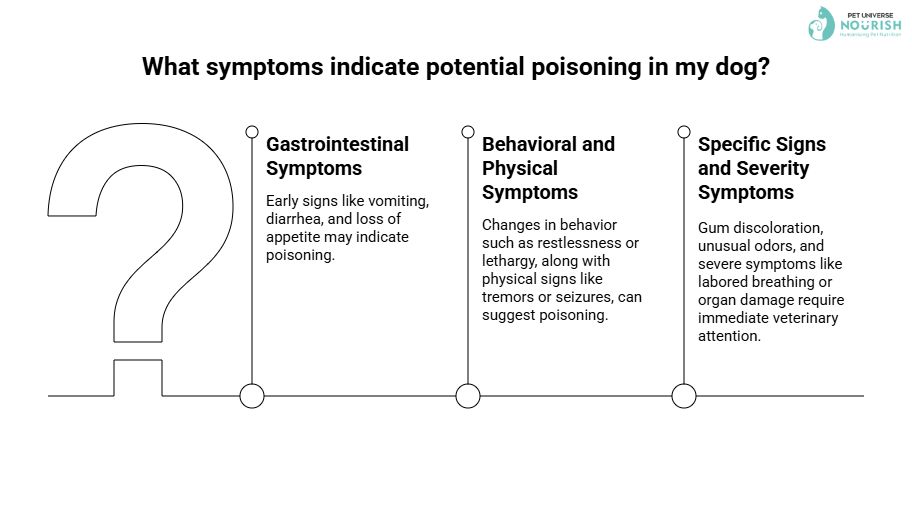
1. Gastrointestinal Symptoms
One of the earliest signs you may notice is vomiting, which can happen repeatedly and sometimes contains blood. This reaction often appears quickly after a dog ingests a harmful substance. If your dog vomits more than once in a short period, you should treat it as a warning sign.
Diarrhea is another common indicator, and it may range from mild to severe. In some cases, the stool can be dark, bloody, or unusually discolored. You might also see your dog straining or dry heaving, which signals irritation in the digestive tract.
Loss of appetite often follows, as many poisoned dogs refuse food they would normally enjoy. Increased thirst or urination may accompany these changes, pointing to stress on the kidneys or liver. When these symptoms appear together, they strongly suggest your dog’s system is reacting to a toxin.
2. Behavioral and Physical Symptoms
You may first notice changes in your dog’s behavior before any obvious physical signs appear. Restlessness, unusual agitation, or confusion can be early indicators that something is wrong. In contrast, some dogs may withdraw, showing depression or marked lethargy.
Physical symptoms often follow quickly and can be more alarming. Tremors, seizures, or a staggering walk suggest the nervous system is being affected. In severe cases, your dog may collapse or appear too weak to stand.
Because these signs can overlap with other health issues, it helps to look for a combination of behaviors and physical changes. For example, a dog that is both unusually quiet and unsteady on its feet is more likely experiencing poisoning than simple fatigue. Watching for these patterns gives you a clearer picture of the urgency.
3. Specific Signs and Severity Symptoms
You may first notice changes in your dog’s gums or mouth. Pale, yellow, or bluish gums often suggest that oxygen or blood circulation is being affected. Excessive drooling, along with unusual odors from the mouth, can also signal exposure to a harmful substance.
Digestive changes are another common indicator. Watch for bloody or dark-colored stool, urine with discoloration, or repeated vomiting. These symptoms point to internal irritation or bleeding, which can escalate quickly if left untreated.
More severe poisonings can affect vital organs and body functions. Labored breathing, rapid breathing, irregular heartbeat, or seizures suggest the toxin is spreading beyond the digestive system. In prolonged cases, you might see kidney failure, organ damage, or an inability to urinate, all of which require urgent veterinary care.
My Dog Is Showing Dog Poisoning Symptoms: What Should I Do?
If your dog is showing signs of poisoning, you need to act quickly but stay calm. There are several steps you should take to protect your dog’s health, and the order in which you act can make a difference.
Here are the necessary steps to take:
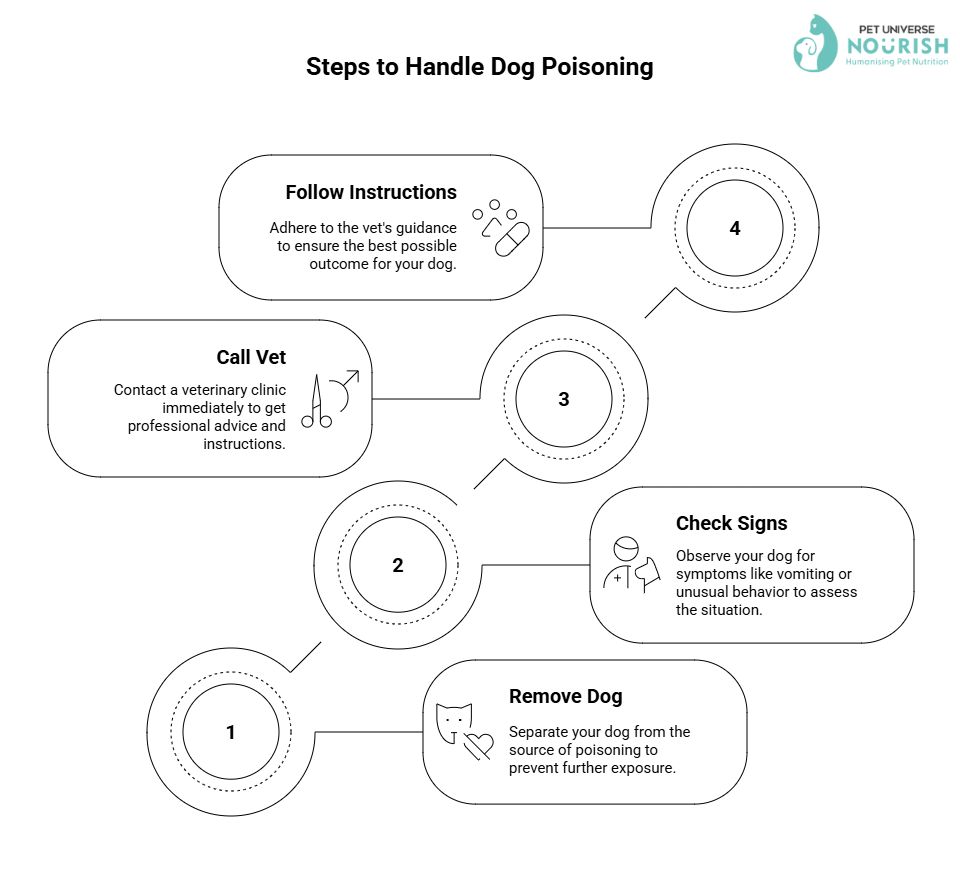
Step 1: Remove Your Dog From The Source
The first thing you need to do is separate your dog from whatever caused the problem. If it’s a household chemical, spilled food, or a plant, move your dog to a safe area right away. This prevents them from taking in more of the substance and reduces the chance of further exposure.
Be mindful of your own safety while doing this. Use gloves or a tool if you need to handle the material, since some toxins can harm people as well. If you can safely identify what your dog may have eaten or touched, make a mental note or take a photo—this can help a veterinarian later.
Step 2: Check For Key Warning Signs
You need to pay attention to physical changes that often appear quickly. Signs like vomiting, diarrhea, or drooling can indicate that your dog’s body is reacting to something harmful. Look at their gums—pale, blue, or yellow coloring can reveal circulation or organ problems.
Behavioral shifts are just as important. If your dog suddenly seems weak, stumbles while walking, or begins trembling, these are red flags. Unusual breathing patterns, such as rapid or shallow breaths, should also make you cautious and prompt immediate attention.
Step 3: Call A Veterinary Clinic
If you suspect poisoning, your next move should be to call a veterinary clinic right away. Even if your dog only shows mild signs like slight vomiting or low energy, a professional can determine how urgent the situation is. Waiting to see if it passes on its own risks giving the poison more time to cause harm.
When you call, be ready to share clear details: what your dog may have eaten, how much, and when it happened. Mention any symptoms you’ve noticed, such as drooling, diarrhea, or tremors. The clinic may advise you to come in immediately or give specific instructions for safe first steps at home.
Step 4: Follow Professional Instructions
Once you’ve contacted a veterinarian, the most important thing you can do is follow their directions exactly. If they tell you to bring your dog in immediately, do not delay. Acting quickly prevents complications and gives your pet the best chance of recovery.
You may be told to withhold food while your dog is actively vomiting, as feeding too soon can worsen symptoms. In some cases, you’ll only be allowed to offer small sips of water, and only if the vet approves. Always call the clinic before resuming normal meals or fluids to avoid setbacks in treatment.
Wrapping Up
By now you understand that recognizing symptoms of poisoning in your dog is not about memorizing every possible toxin but about paying attention to sudden, unusual changes in their health and behavior. Quick action often makes the difference, so your role is to stay alert and respond without delay.
Also, another thing to take into consideration is what you feed your pets. At Nourish, we offer the most premium pet food in Malaysia, where the foods are tailor-made to better your pet’s health.
You can also read more about our ingredients from the button below:

 EN
EN
 Fat Bloom Pet Food And How It Impacts Product QualityFat Bloom Pet Food And How It Impacts Product Quality When a thin, whitish ...