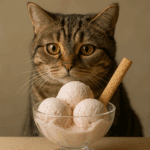
You might notice your cat showing interest in your ice cream, but it’s generally not a safe treat. Most cats are lactose intolerant, so even a small amount can lead to diarrhea, gas, or stomach discomfort. On top of that, ice cream is high in sugar and fat, which provides no nutritional benefit for your cat.
Some flavors also contain dangerous ingredients like chocolate or artificial sweeteners, which can be toxic. Even if a plain vanilla lick doesn’t cause immediate harm, it’s not worth the risk of digestive upset or long-term health issues. If you want to spoil your cat, stick to treats made specifically for them or safe alternatives like small portions of cooked meat.
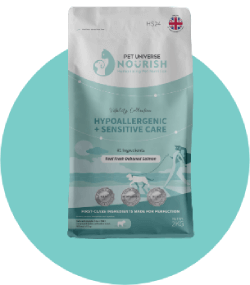
Also, if you’re looking for delicious cat food in Malaysia, look no further as Nourish provides the ultimate premium pet food. To know more about its ingredients, click the button below:
Is Ice Cream Safe For Cats?
Ice cream is generally not safe for your cat. Most cats cannot properly digest dairy, so even a small amount can lead to stomach upset, gas, or diarrhea. On top of that, the high sugar and fat content offer no nutritional benefit and can contribute to weight gain over time.
Some flavors pose even greater risks. Ingredients like chocolate, xylitol, raisins, or caffeine can be toxic and in some cases life-threatening. Even plain vanilla may cause discomfort, especially since the cold temperature can trigger sensitivity or a brief “brain freeze.” For these reasons, it’s best to avoid offering ice cream as a treat.
For more information about cats and their interactions with other foods, check out our articles from our Pet Preacaution series here:
Is Ice Cream Bad For Cats: Potential Health Hazards For Cats Eating Ice Cream
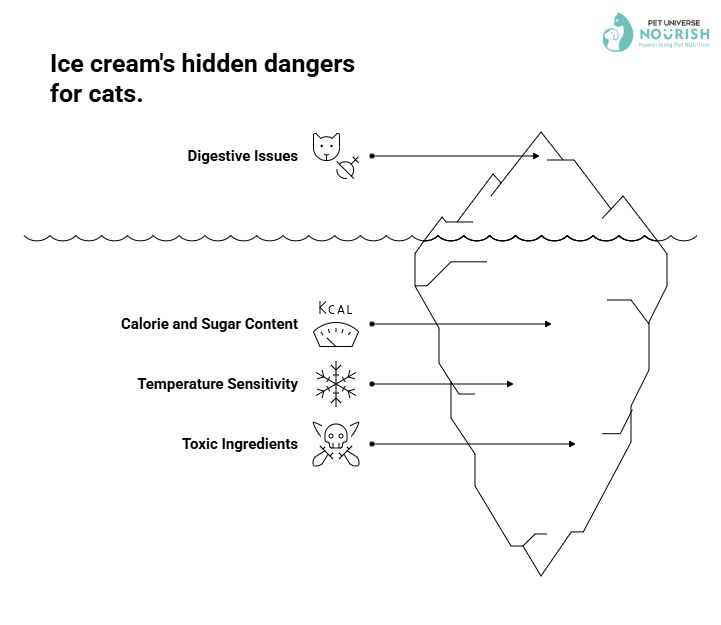
When your cat eats ice cream, the first issue is often digestion. Most cats are lactose intolerant, meaning their stomachs cannot process dairy properly. This can quickly lead to diarrhea, bloating, or vomiting after even a small serving.
Another hazard comes from the calorie and sugar content. Ice cream is dense in fat and sugar, which can contribute to weight gain and eventually obesity in cats. Over time, this puts stress on their joints and increases the risk of diabetes.
Temperature also matters. Cats are not used to eating extremely cold foods, and the chill of ice cream can cause discomfort. You may notice your cat pulling away after a lick, showing signs that the cold is unpleasant.
Some ice cream flavors contain ingredients that are outright dangerous. Chocolate is toxic to cats, and artificial sweeteners like xylitol can be life-threatening even in small amounts. A quick taste of the wrong flavor could become a medical emergency.
Overconsumption: Side Effects To Look Out For When Cats Eat Too Much Ice Cream
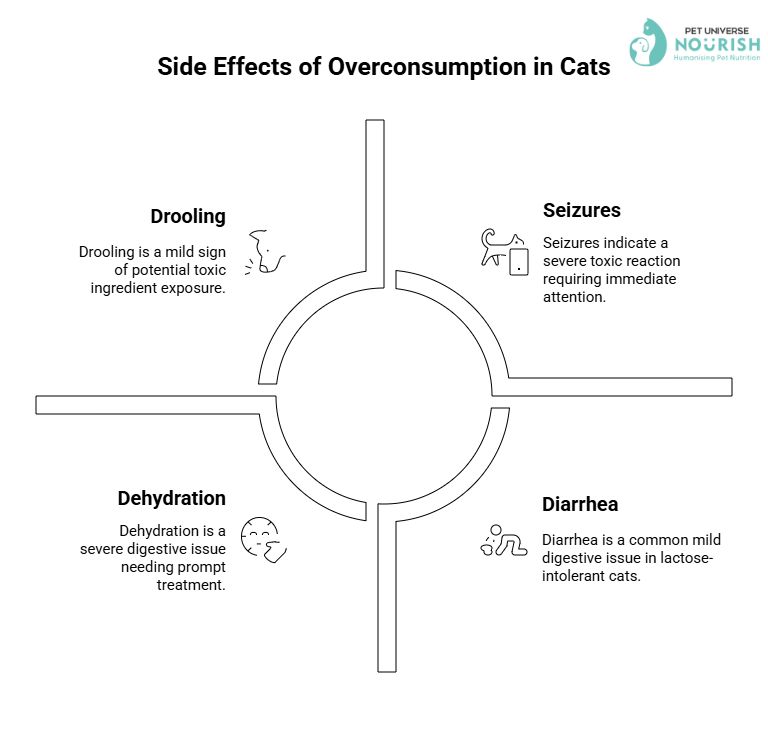
Too much ice cream can upset your cat’s digestive system. Because most cats are lactose intolerant, you may notice diarrhea, vomiting, gas, or bloating soon after they eat it. These symptoms usually show up quickly and can make your cat visibly uncomfortable.
Overeating sugar and dairy can leave your cat unusually tired. If your normally active cat suddenly seems sluggish, it may be reacting to the extra calories or struggling with digestive distress. Watch for long periods of inactivity or a lack of interest in play.
Stomach discomfort is another common issue. Cats may hunch over, vocalize more than usual, or avoid moving if they feel abdominal pain. These signs are subtle but important to recognize when monitoring their reaction.
Some ice cream contains ingredients that are far more dangerous than dairy or sugar. Chocolate, xylitol, and certain flavorings can cause drooling, tremors, rapid breathing, or even seizures. If you suspect your cat ate a toxic ingredient, seek veterinary help right away.
Repeated vomiting or diarrhea can also lead to dehydration. You can check by gently pulling up the skin on the back of your cat’s neck—if it doesn’t snap back quickly, dehydration may be present. Dry gums are another clear warning sign.
Frequency Level: How Often Can I Feed My Cats Ice Cream?
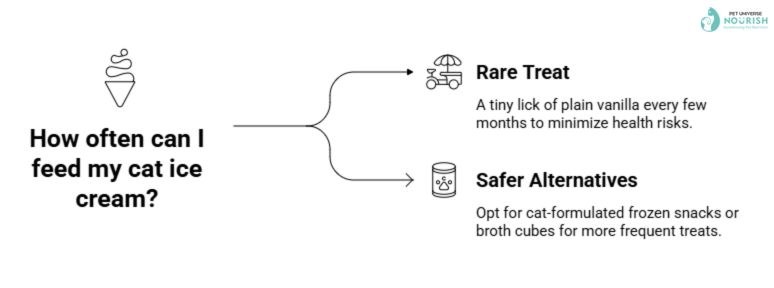
You should avoid making ice cream a regular part of your cat’s diet. If you decide to share, keep it extremely rare—think a tiny lick of plain vanilla once every few months, not weekly or even monthly.
Portion size matters just as much as frequency. Keep servings under a teaspoon, since larger amounts raise the risk of stomach upset. If you want to treat your cat more often, choose safer options like cat-formulated frozen snacks or simple frozen broth cubes.
Frequently Asked Questions About Can Cat Eat Ice Cream?
1. Is A Small Amount Of Ice Cream Okay For Cats?
You might assume that giving your cat just a lick or two of ice cream is harmless, but it can still cause problems. Most cats are lactose intolerant, so even a small taste may lead to stomach upset, including vomiting or diarrhea.
Ice cream also contains sugar and fat that your cat doesn’t need, and certain flavors like chocolate or those with artificial sweeteners can be dangerous. If you do allow a tiny taste, it should only be plain vanilla and offered rarely, but it’s safest to avoid it altogether.
2. Why Can’t Cats Digest Dairy?
You may notice that your cat shows interest in milk or ice cream, but their body is not built to handle it. As cats grow past kittenhood, they stop producing enough of the enzyme lactase, which is needed to break down lactose, the natural sugar in dairy.
Without lactase, lactose passes through the digestive system without being properly absorbed. This often leads to discomfort such as gas, diarrhea, or stomach cramps, making dairy products an unsuitable choice for your cat’s diet.
3. Are There Safe Ice Cream Alternatives For Cats?
You can offer your cat cool treats without turning to regular ice cream. Frozen portions of their wet food or broth-based cubes can provide a refreshing option that fits their natural diet. These choices avoid the sugar and lactose that often upset a cat’s stomach.
Another option is plain, unsweetened yogurt, but only if your cat tolerates dairy well. Some cats also enjoy small servings of specially made cat “ice cream” products that use safe ingredients. By sticking to these alternatives, you give your cat a treat that’s both enjoyable and less likely to cause health issues.

 EN
EN
 Fat Bloom Pet Food And How It Impacts Product QualityFat Bloom Pet Food And How It Impacts Product Quality When a thin, whitish ...