Feeding your kitten properly is crucial for their health and development. As a new kitten owner, you might be wondering about the best ways to nourish your furry friend. Kittens have unique nutritional needs that differ from adult cats, and understanding these differences is key to helping your kitten grow into a healthy adult.Kittens require more calories, protein, and fat than adult cats to support their rapid growth and high energy levels. Their food should be specially formulated with extra nutrients like amino acids, fatty acids, calcium, and phosphorus to aid in tissue and bone development. As your kitten grows, you’ll need to adjust their diet to match their changing needs.Transitioning from kitten food to adult cat food is an important milestone in your pet’s life. Most kittens are ready for this switch between 10-12 months of age, when they’ve reached about 90% of their adult weight. However, larger breeds may need kitten food for longer. It’s essential to make this transition gradually over a week or two, mixing kitten and adult food in increasing proportions to avoid digestive upset.
Feeding Guide for Kittens: Wet Food vs Dry Food
When choosing food for your kitten, you’ll encounter two main options: wet and dry.Both have their merits and can contribute to your kitten’s health and growth. Incorporating canned food, which is rich in animal-based protein, can help establish healthy eating habits early on.Wet food offers several advantages for your growing kitten. Its high moisture content helps keep your furry friend hydrated, which is crucial for overall health. You’ll find wet food easier to mix with supplements like fish oil or probiotics if needed. It’s also highly palatable, making it ideal for kittens with picky appetites or those recovering from illness.Dry food, on the other hand, supports your kitten’s dental health. As they chew the kibble, it helps remove plaque and tartar from their teeth. Introducing solid food, including dry foods, around 5–6 weeks of age is important, as it helps kittens transition to an all-solid diet by 7–8 weeks. You can use dry food for training or in puzzle toys, providing mental stimulation. It’s also more cost-effective and convenient for many pet owners.Consider feeding your kitten a combination of wet and dry food to reap the benefits of both. This approach provides a balanced diet and allows your kitten to experience different textures and flavors.When selecting kitten food, look for options specifically formulated for growth. These contain higher levels of protein and fat to support rapid development. Brands like Hill’s Science Diet and Purina Pro Plan offer kitten-specific formulas with added nutrients like omega-3 fatty acids for brain and eye development.Remember to consult your veterinarian for personalized advice on feeding your kitten. They can help you determine the best food choices and feeding schedule based on your kitten’s individual needs and health status.
Choosing the Right Kitten Food
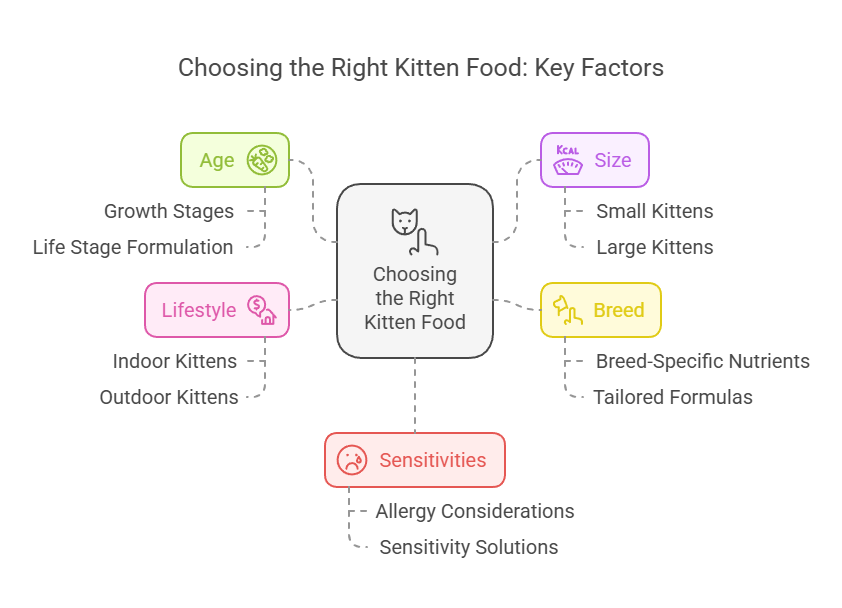
Choosing the right kitten food can feel overwhelming with so many options available, but considering a few key factors can help you make the best decision for your furry friend.
Factors to Consider
When selecting kitten food, keep the following factors in mind:
Age: Kittens have different nutritional needs at various stages of development. Ensure you choose a food formulated for your kitten’s specific life stage.
Size: Kittens come in all shapes and sizes, and their nutritional requirements can vary. Select a food that matches your kitten’s size.
Breed: Some breeds have unique nutritional needs. Opt for a food that caters to your kitten’s breed-specific requirements.
Lifestyle: Whether your kitten is an indoor or outdoor adventurer, their lifestyle can influence their dietary needs. Choose a food that aligns with their activity level.
Sensitivities: If your kitten has any food sensitivities or allergies, look for a food that addresses these specific needs.
By considering these factors and selecting a well-balanced, nutrient-rich kitten food, you can support your kitten’s growth and development, setting them up for a lifetime of optimal health.
Feeding Schedule For Kittens
Establishing a proper kitten feeding schedule for your kitten is crucial for their growth and development. As your furry friend progresses through different stages, their nutritional needs change.It’s important to follow a kitten feeding chart based on age and weight to ensure your kitten receives the right amount of nutrients at each stage.For newborn kittens up to 4 weeks old, feed them kitten milk replacer every 2-3 hours. This frequent feeding ensures they receive adequate nutrients for rapid growth.At 4-8 weeks, start introducing wet kitten food while continuing milk replacer. Offer small meals 4-6 times daily. This transition helps their digestive system adapt to solid foods.From 8-16 weeks, provide a mix of wet and dry kitten food 3-4 times a day. Gradually increase portion sizes as your kitten grows. Aim for about 250-280 calories per day during this period.At 4-6 months, reduce feedings to 3 times daily. Your kitten’s calorie needs will increase to around 60-65 calories per pound of body weight.By 6-12 months, transition to 2 meals per day. Monitor your kitten’s weight and adjust portions accordingly. Most kittens need about 50 calories per pound at this stage.
Age
Feeding Frequency
Daily Calorie Intake
0-4 weeks
Every 2-3 hours
Varies (milk replacer)
4-8 weeks
4-6 times
200-250 calories
8-16 weeks
3-4 times
250-280 calories
4-6 months
3 times
60-65 cal/lb of body weight
6-12 months
2 times
50 cal/lb of body weight
Remember to consult your veterinarian for personalized advice on your kitten’s feeding schedule. They can help you adjust portions based on your kitten’s specific needs and growth rate, ensuring you know how much to feed at each stage.
Food to Avoid for Kittens
Feeding your kitten a proper diet is crucial for their health and development. While many human foods are safe for cats, some can be harmful or even toxic. It’s important to know which foods to avoid giving your kitten.For newborn kittens who cannot nurse from their mother, kitten formula is essential. It provides the necessary nutrients and supports their development during the early stages of life.Chocolate is a big no-no for kittens. It contains theobromine, which can affect their heart and nervous system. Even small amounts can be dangerous, so keep all chocolate treats out of your kitten’s reach.Onions and garlic are also harmful to kittens. These foods can damage red blood cells and lead to anemia. Avoid giving your kitten any foods containing onions or garlic, including baby food that may contain these ingredients.Raw eggs are another food to steer clear of. They can cause skin and coat problems in kittens and may contain harmful bacteria. Stick to cooked eggs if you want to give your kitten an egg-based treat.Bones from fish or chicken pose a risk to your kitten’s dental health and digestive system. They can splinter and cause injuries or blockages. Always remove bones before offering any fish or poultry to your kitten.Milk might seem like a natural choice for kittens, but many cats are lactose intolerant. Too much milk can lead to digestive issues and diarrhea. If you want to give your kitten a milk-like treat, opt for special cat milk products instead.Remember, the safest option is to feed your kitten a high-quality, commercial kitten food that meets all their nutritional needs. This ensures they get the right balance of nutrients for proper growth and development.
Changing From Kitten Food to Adult Cat Food
As your kitten grows, their nutritional needs change, making the transition from a kitten’s diet to adult cat food crucial for their ongoing health and development. Around 12 months of age, most kittens are ready to transition to adult cat food. This shift is crucial for their ongoing health and development.Start the transition process gradually. Replace 25% of your kitten’s food with adult cat food on the first day. Keep this ratio for 2-3 days, monitoring your cat’s reaction. If all goes well, increase the adult food to 50% for another 2-3 days.Continue this pattern, moving to 75% adult food for a few days before finally switching to 100% adult cat food. This gradual approach helps prevent digestive upset and allows your cat to adjust to the new flavors and textures.Be patient during this process. Some cats may need more time at each stage. If you notice any signs of digestive discomfort, slow down the transition. You can always consult your veterinarian for personalized advice.Remember, larger cat breeds may need to stay on kitten food for longer, up to 18 months. Your vet can guide you on the best timing for your specific cat.When choosing adult cat food, look for high-quality options that meet AAFCO standards. Consider your cat’s individual needs, such as weight management or hairball control, when selecting a new food.
Conclusion
Feeding your kitten properly is crucial for their health and development. By following the guidelines in this guide, you’ll ensure your furry friend gets the right nutrition at each stage of growth. Remember to adjust portions as your kitten grows and always provide fresh water.At Nourishbe it cats or dogs, you are given a variety of options of pet food to choose from, or made with premium ingredients and formulated ideally for your pets’ well-being.

 EN
EN
 Fat Bloom Pet Food And How It Impacts Product QualityFat Bloom Pet Food And How It Impacts Product Quality When a thin, whitish ...