Can Cats Eat Toasted Bread: Safety, Risks, and What Owners Should Know
Cats often show interest in human food, and bread is no exception. A small bite may seem harmless, but owners need clear facts before sharing it. Cats can eat small amounts of plain baked bread, but it should only be an occasional treat and not a regular part of their diet.
But can cat eat toasted bread?
Bread does not meet a cat’s nutritional needs. Cats are obligate carnivores, so they need animal protein, not carbohydrates. Some types of bread and certain toppings can also cause health problems.
This article explains which breads are safer, the risks to watch for, and how to offer bread without harm. It also covers better treat options and when a veterinarian should step in.
Can Cats Eat Toasted Bread?
Cats can eat small amounts of plain, baked bread, but bread does not meet their nutritional needs. Owners should treat it as an occasional snack, not a regular part of the diet.
Most healthy cats can eat plain, fully baked bread in small pieces. This includes white, wheat, rye, and sourdough. Bread crust is also safe if it is plain and soft enough to chew. Hard crust can pose a choking risk, especially for kittens or senior cats.
Bread offers little benefit to cats. They are obligate carnivores and need animal protein to stay healthy. Bread is mostly carbohydrates and does not provide the nutrients cats require.
Owners should avoid:
Raw dough (it can expand in the stomach and cause serious harm)
Bread with garlic, onions, raisins, chocolate, or xylitol
Large portions that add excess calories
Cats with obesity, diabetes, or digestive issues should not eat bread unless a veterinarian approves it.
Expert Opinions on Feeding Bread to Cats
Veterinarians agree that cats can eat bread in moderation, but they do not recommend it as a regular food. Experts stress that bread should count as an occasional treat. It should never replace balanced cat foods.
Many vets suggest offering only a small bite. A piece about the size of a fingernail is enough for most cats. Feeding bread every day can lead to weight gain because it adds empty calories.
Experts also warn owners to read ingredient labels. Flavored breads often contain ingredients that are unsafe for cats. Even toppings like butter or jam increase fat and sugar intake.
When owners offer bread, they should keep it plain, baked, and limited. Fresh water and a complete commercial cat diet should remain the focus of daily feeding.
Plain, fully baked bread is not toxic to most cats in small amounts. The main risk comes from added ingredients, high calories, and lack of real nutrition.
Can Cats Eat Bread Crust?
Many owners ask, can cats eat bread crust. A small piece of plain crust is usually safe for a healthy cat.
Bread crust contains the same basic ingredients as the rest of the slice. It offers little protein and mostly carbohydrates. Cats do not need carbs, so crust adds calories without real benefit.
The crust can also feel harder and drier than soft bread. Some cats may have trouble chewing it, especially older cats or those with dental disease. Large, tough pieces can pose a mild choking risk.
Owners should:
Offer only a small bite
Make sure the crust is plain
Avoid giving it often
Crust should stay an occasional treat, not part of a regular diet.
Can Cats Eat Toasted Bread?
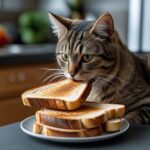
Some people wonder, can cats eat toasted bread instead of regular bread. Plain toast is generally safe in small amounts.
Toasting does not make bread toxic. It simply removes moisture and makes it crisp. However, dry toast can be harder to chew and swallow.
The bigger concern is toppings. Butter, jam, honey, and spreads add sugar or fat. These increase calories and may upset a cat’s stomach.
Never give toast with:
Garlic butter
Onion powder
Raisins
Chocolate spreads
Plain, dry toast in a tiny piece is unlikely to cause harm. Still, it offers no real nutrition and should remain rare.
Whole Wheat vs. White Bread
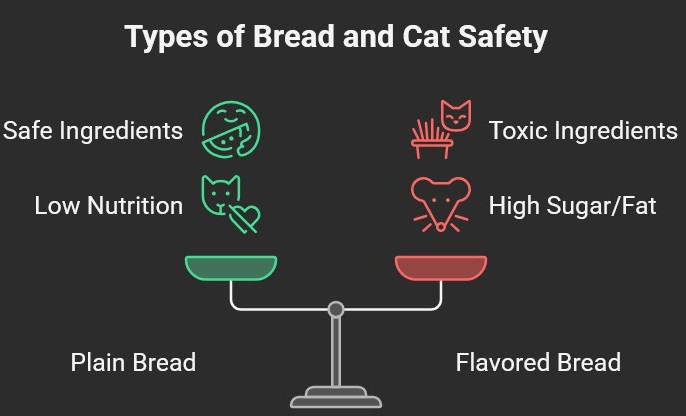
Both whole wheat and white bread are usually safe if they are plain and fully baked. Neither type is toxic on its own.
Whole wheat bread contains more fiber than white bread. Fiber may cause mild stomach upset in some cats, especially if they are not used to it. White bread is lower in fiber but still high in carbohydrates.
From a nutrition view, neither option benefits cats. Cats are obligate carnivores. They need animal protein, not grains.
Overweight cats or cats with diabetes should avoid bread more strictly. Bread adds “empty calories” that can make weight control harder.
If an owner chooses to offer bread, the safest choice is:
Plain
Fully baked
Free from seeds and added flavorings
Flavored and Specialty Breads
Flavored breads pose the highest risk. Many contain ingredients that are unsafe for cats.
Garlic and onion are toxic to cats, even in small amounts. Breads flavored with these ingredients should never be given. Raisin bread is also dangerous, as raisins can cause serious kidney problems.
Sweet breads often contain high sugar and fat. Nuts, chocolate, and artificial sweeteners may also appear in specialty loaves. These can cause digestive upset or more serious issues.
Raw bread dough is especially dangerous. Yeast dough can expand in a cat’s stomach and produce alcohol as it ferments. This can lead to bloating and alcohol poisoning.
When it comes to specialty breads, the safest rule is simple: if it contains added flavors, fruits, or seasonings, keep it away from the cat.
Potential Benefits and Risks
Bread is not toxic to most cats, but it does not meet their dietary needs. Small amounts of plain bread are usually safe, while certain types and ingredients can cause harm.
Nutritional Value of Bread for Cats
Bread offers very little nutritional value for cats. Cats are obligate carnivores. Their bodies need animal protein, taurine, and specific fats to stay healthy.
Plain white or wheat bread mainly contains carbohydrates. Cats do not require carbohydrates in their diet. Bread also lacks key nutrients such as taurine, vitamin A in its active form, and enough protein.
A small piece of bread may provide a few calories. However, those calories are considered “empty” because they do not support muscle growth, organ health, or energy needs in a meaningful way.
Some breads contain small amounts of fiber. While fiber can help digestion in some cases, cats usually get enough from balanced commercial cat food.
Bread should never replace a complete and balanced cat diet. It does not provide the nutrients a cat needs to survive or thrive.
Potential Health Risks
Plain baked bread is not toxic to cats. However, it can still cause problems.
Raw bread dough is dangerous. Yeast in the dough can expand in a cat’s stomach. This can cause severe bloating, pain, and even life-threatening stomach twisting. Fermenting dough also produces alcohol, which can lead to alcohol poisoning.
Certain ingredients add more risk. Avoid bread that contains:
Garlic or onions
Raisins
Chocolate
Xylitol (artificial sweetener)
Large amounts of salt or sugar
These ingredients can cause toxicity, digestive upset, or organ damage.
Even plain bread can lead to weight gain if fed often. Extra calories increase the risk of obesity, diabetes, and joint stress. Cats that eat too much bread may also experience vomiting or diarrhea.
Signs of Bread Intolerance in Cat
Some cats tolerate a small bite of plain bread. Others show mild digestive upset.
Common signs of intolerance include:
Vomiting
Diarrhea
Gas or bloating
Decreased appetite
These signs often appear within hours of eating bread. In most mild cases, symptoms resolve on their own.
More serious signs require urgent veterinary care. These include:
Swollen or painful abdomen
Lethargy
Uncoordinated movement
Tremors or seizures
These severe symptoms may occur if a cat eats raw dough or toxic ingredients. Quick action can prevent complications.
If a cat shows repeated stomach upset after eating bread, the owner should avoid giving it again.
Safe Serving Size
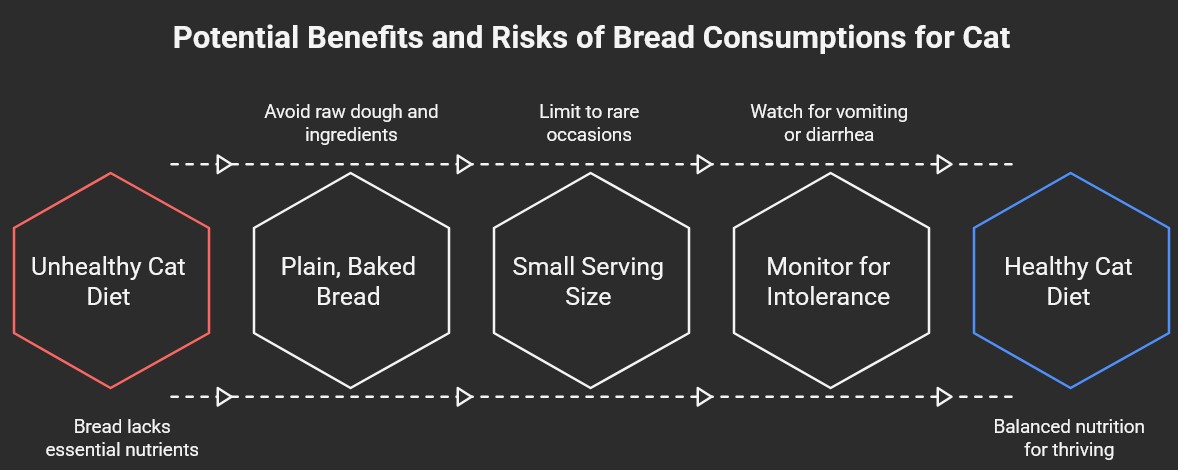
If a cat eats bread, it should be plain, fully baked, and unseasoned. No butter, spreads, or toppings should be added.
A safe serving size is very small. For most adult cats, this means:
A piece about the size of a small coin
Given only on rare occasions
Bread should not make up more than 10% of a cat’s daily calorie intake, and even that is not ideal. Treats should stay minimal to protect weight and overall health.
Kittens, senior cats, and cats with diabetes or obesity should not receive bread. These cats need strict nutrition control.
Owners should always prioritize complete commercial cat food or vet-approved diets over human foods like bread.
Safe Bread Feeding Practices
Cats can eat small amounts of plain bread, but owners must control the type and portion. Careful introduction and strict ingredient checks reduce health risks.
How to Introduce Bread to a Cat
Start with plain, fully baked white or wheat bread. Do not add butter, oil, or spreads.
Offer a piece no larger than a small cube. Bread should be an occasional treat, not a daily snack. Once or twice a month is enough for most cats.
Watch the cat for 24 hours after the first taste. Look for vomiting, diarrhea, bloating, or low energy. Stop feeding bread if any of these signs appear.
Bread adds mostly carbohydrates and little protein. Cats are obligate carnivores, so they need meat-based nutrients. Owners should never replace regular cat food with bread.
Avoid feeding bread to cats with diabetes, obesity, or digestive issues. Extra carbohydrates can raise blood sugar and add empty calories.
Bread Ingredients to Avoid for Cats
Many breads contain ingredients that are unsafe for cats. Always read the label before offering any piece.
Avoid bread that contains:
Garlic, onions, or leeks (toxic to cats)
Raisins or grapes (can cause kidney failure)
Chocolate (toxic even in small amounts)
Xylitol (artificial sweetener that can cause low blood sugar)
Nuts and seeds (hard to digest, high in fat)
Do not give raw dough. Yeast dough can expand in the stomach and produce alcohol as it ferments. This can lead to bloating and alcohol poisoning.
Sweet breads and pastries often contain high sugar and fat. These increase the risk of weight gain and stomach upset.
When in doubt, choose no bread at all. Plain, simple ingredients lower the risk, but bread should remain a rare treat.
Alternatives to Bread for Cats
Cats do not need bread in their diet. They do best with animal-based foods that support their growth, energy, and organ health.
Cat-Friendly Treat Options
Commercial cat treats offer a safer choice than bread. Manufacturers design these treats to meet feline nutrition needs and control calorie content.
Look for treats that list real meat as the first ingredient. Chicken, turkey, salmon, or beef provide protein that cats can digest well. Avoid treats with high sugar, artificial colors, or too many fillers.
Freeze-dried meat treats also work well. They usually contain one ingredient and little processing. This makes them simple and easy on a cat’s stomach.
Treats should make up no more than 10% of a cat’s daily calories. Owners should check feeding guidelines on the package and adjust regular meals if needed. Overfeeding treats can lead to weight gain, even if the treats are healthy.
Fresh water should always stay available, especially if treats are dry.
Human Foods Safe for Cats
Some human foods are safer than bread and offer more nutrition. These foods should stay plain, cooked, and free from seasoning.
Safe options include:
Cooked chicken or turkey (no skin, bones, or spices)
Cooked lean beef
Cooked fish like salmon (boneless and unseasoned)
Scrambled or boiled eggs
These foods provide protein, which cats need as obligate carnivores. Small, bite-sized pieces reduce choking risk.
Certain vegetables, such as plain cooked carrots or green beans, are safe in small amounts. However, they should not replace meat.
Owners must avoid foods with garlic, onion, raisins, chocolate, nuts, or heavy spices. These ingredients can harm cats. When in doubt, sticking with meat-based options protects a cat’s health.
When to Consult a Veterinarian
Some cats tolerate small amounts of plain bread without trouble, but certain ingredients and symptoms require fast action. Owners need to know which signs signal a mild upset and which demand urgent care.
Identifying Adverse Reactions
A cat that eats a small piece of plain bread may show no signs at all. Mild stomach upset can include vomiting, diarrhea, gas, or reduced appetite.
These signs often pass within a day. If they last more than 24 hours, a veterinarian should examine the cat.
Seek immediate care if the bread contained raisins, garlic, onions, chives, chocolate, or xylitol. These ingredients are toxic to cats. Raw yeast dough is also dangerous because it can expand in the stomach and release alcohol as it ferments.
Call a veterinarian at once if the cat shows:
Repeated vomiting
Severe lethargy
Tremors or seizures
Swollen or painful abdomen
Trouble breathing
Quick treatment lowers the risk of serious harm.
Veterinary Guidance on Cat Diets
Veterinarians advise feeding cats a complete and balanced cat food as their main diet. Bread does not provide the nutrients cats need, such as taurine and high-quality animal protein.
A veterinarian should guide any diet changes, especially for cats with:
Diabetes
Obesity
Food allergies
Digestive disorders
Even small amounts of bread can affect blood sugar or add empty calories. Overweight cats face higher risk from extra carbohydrates.
If an owner wants to offer bread as a rare treat, a veterinarian can suggest a safe portion size. In most cases, this means a small, bite-sized piece of plain baked bread, given only on occasion. Professional guidance helps prevent long-term health problems.
Frequently Asked Questions
Is it safe to feed my cat small amounts of bread?
A small bite of plain, fully baked bread is usually safe for a healthy cat. White and whole wheat bread without toppings are the safest options.
Owners should only offer tiny pieces and not make it a daily habit. Bread should never replace regular cat food.
Raw dough is not safe at all. It can expand in the stomach and cause serious harm.
What are the potential health risks of cats consuming bread?
Bread adds extra calories without useful nutrients. This can lead to weight gain over time.
Some cats may develop gas, bloating, or diarrhea after eating bread. Cats with diabetes or obesity face higher risks from extra carbohydrates.
Ingredients like garlic, onions, raisins, or some seeds can be toxic. These can cause digestive upset or more serious illness.
Are there any nutritional benefits to giving bread to cats?
Bread offers very little nutrition for cats. Cats are obligate carnivores and need animal-based protein.
Bread does not provide the amino acids, vitamins, or minerals that cats require. It acts more like filler than food.
A balanced commercial cat diet already meets their needs. Bread does not improve their health.
How does bread affect a cat’s digestive system?
Most cats can digest small amounts of baked bread. However, their bodies are not designed to process large amounts of carbohydrates.
Too much bread can cause loose stools or stomach discomfort. Some cats may vomit if they eat too much at once.
Raw yeast dough is especially dangerous. It can ferment in the stomach and produce gas and alcohol.
Can certain types of bread be toxic to cats?
Plain bread is usually safe in small amounts. Bread with raisins, chocolate, garlic, or onions is not safe.
Some rye breads contain caraway seeds, which may cause problems. Sweet breads with xylitol are extremely dangerous.
Owners should always check ingredient labels before sharing any food. When in doubt, they should avoid giving it.
How often can I safely give bread to my cat as a treat?
Bread should only be an occasional treat. Once in a while means a small piece no more than once every few weeks.
Treats should make up no more than 10% of a cat’s daily calories. Most cats do better without bread at all.
Fresh water should always be available after any treat. Regular meals should remain the main source of nutrition.

 EN
EN
 Fat Bloom Pet Food And How It Impacts Product QualityFat Bloom Pet Food And How It Impacts Product Quality When a thin, whitish ...