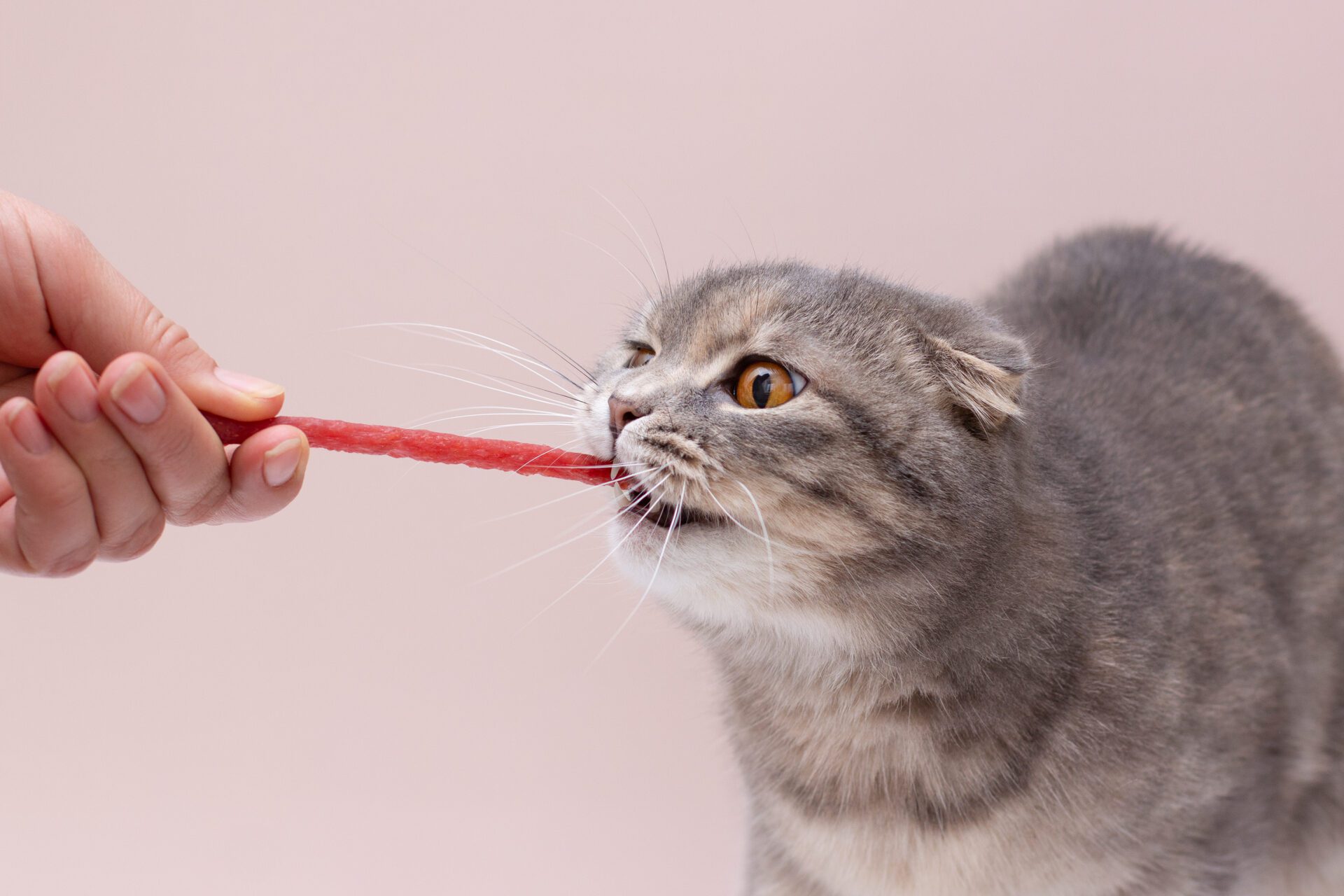
Answering the Question: Can Kitten Eat Adult Cat Food?
The short answer is no, kittens should not regularly eat adult cat food. Kittens have specific nutritional needs that differ significantly from adult cats, and these needs must be met for proper development.
Kitten food is specially formulated with higher calories, more protein, and additional fat to support their rapid growth phase, whereas balanced adult cat food is designed to maintain the health and wellness of adult cats. These nutrients are essential for their developing bodies and high energy levels.
Important nutritional differences include DHA (an omega-3 fatty acid) which supports brain and eye development in kittens. Kitten food also contains carefully balanced levels of calcium, phosphorus, and vitamin A that are crucial for bone growth and overall health.
If your kitten accidentally eats some adult cat food once or twice, don’t panic. It won’t cause immediate harm, but it shouldn’t become a regular occurrence.
Understanding Kitten Nutrition
Kitten nutrition is a cornerstone of their healthy growth and development. Just like human babies, kittens have unique dietary needs that must be met to ensure they grow into strong, healthy adult cats. During their first year, kittens experience rapid growth, and their diet needs to support this critical phase.
The Core Differences Between Kitten Food and Adult Cat Food
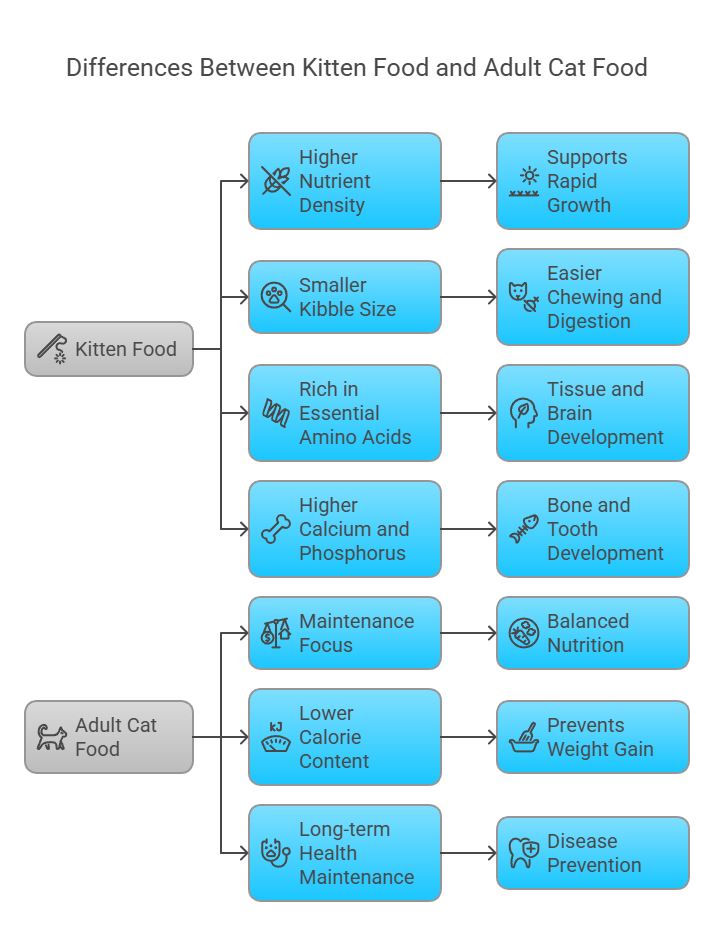
Kitten food contains significantly more calories, protein, and fat than adult cat food. This higher nutrient density supports the rapid growth and development kittens experience in their first year. Your kitten needs this extra energy to fuel their playful antics and build strong muscles.
Managing a kitten’s diet carefully during this transition is crucial to ensure they receive the proper nutrients for healthy growth.
The physical size of the food differs too. Kitten kibble is typically smaller to accommodate their tiny mouths and developing teeth. This makes it easier for them to chew and digest their meals properly.
Kitten formulas are rich in essential amino acids and fatty acids that support tissue and brain development. These compounds are particularly important during the critical early growth stages when their bodies are rapidly changing.
Calcium and phosphorus levels are higher in kitten food to support proper bone and tooth development. Your growing kitten needs these minerals in precise ratios to build a strong skeletal structure that will support them throughout life.
Adult cat food focuses more on maintenance rather than growth. It contains balanced nutrition designed to maintain ideal weight and support overall health for mature cats. The calorie content is typically lower to prevent weight gain in less active adult cats.
The vitamin and mineral profiles differ between the two food types. Kitten food provides extra nutrients needed for development, while adult formulations focus on long-term health maintenance and disease prevention.
Digestive considerations also play a role in the different formulations. Kitten food tends to be gentler on developing digestive systems, while adult cat food supports mature digestive function and may include ingredients that ease digestion and reduce inflammation.
Risks of Feeding Kittens Adult Cat Food
Feeding kittens adult cat food might seem convenient, especially in a multi-cat household, but it can pose significant risks to their health and development. Adult cat food is designed to meet the nutritional needs of mature cats, not growing kittens, and lacks the essential nutrients that kittens require.
Transitional Period: When Should You Change Your Kitten Food Diet to an Adult One?
Most kittens should transition to adult cat food around 10-12 months of age. This timeline represents when most cats reach physical maturity and no longer need the extra nutrients found in kitten formulas.
Larger cat breeds like Maine Coons may need to stay on kitten food longer. These cats often don’t reach their full adult size until 12-18 months, so they benefit from the extra calories and nutrients in kitten food for a longer period.
The transition process should never be abrupt. A sudden change can upset your kitten’s stomach and cause digestive issues. Instead, make the switch gradually over a 7-10 day period.
Recommended transition schedule:
Days 1-2: 75% kitten food, 25% adult food
Days 3-4: 50% kitten food, 50% adult food
Days 5-6: 25% kitten food, 75% adult food
Days 7+: 100% adult food
Watch your cat closely during this period. If you notice diarrhea, vomiting, or refusal to eat, slow down the transition process. Some cats need more time to adjust to new foods.
Remember to adjust portion sizes too. Adult cat food typically requires different serving amounts than kitten food. Follow the feeding guidelines on the package, but be ready to adjust based on your cat’s activity level and weight.
Your veterinarian can provide personalized advice about the right time to make the switch for your specific cat. They might recommend special formulations based on your cat’s health needs or breed characteristics.
What Food You Should and Shouldn’t Feed Your Kitten
Feeding your kitten the right food is crucial for their growth and development. Kitten-specific formulas are designed with higher protein and calorie content to support their rapid growth phase.
During the weaning process, wet or canned food is preferable to dry food due to kittens’ developing teeth, which can struggle with the harder texture of dry food.
Kittens need specially formulated kitten food until they reach 10-12 months of age. This ensures they receive the proper nutrients for healthy development. While adult cat food won’t immediately harm your kitten if consumed accidentally, it lacks the necessary nutritional density kittens require.
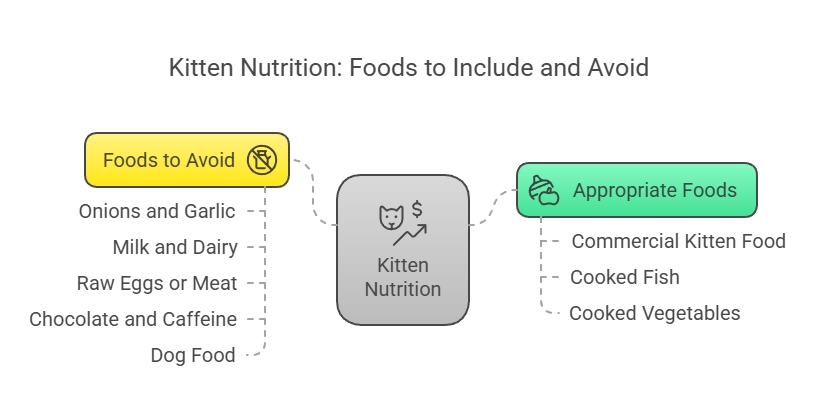
Appropriate foods for kittens include:
High-quality commercial kitten food (wet or dry)
Small amounts of cooked fish like salmon or sardines (bones removed)
Tiny portions of cooked vegetables such as carrots or green beans
Protein-rich options support muscle development, while small amounts of vegetables can provide additional nutrients and fiber.
Foods to avoid giving your kitten:
Onions and garlic (toxic to cats)
Milk and dairy products (most cats are lactose intolerant)
Raw eggs or meat (risk of bacteria)
Chocolate and caffeine
Dog food (lacks essential nutrients cats need)
Remember that treats should make up no more than 10% of your kitten’s daily caloric intake. Fresh water should always be available to keep your kitten hydrated throughout the day.
Establishing good eating habits early helps your kitten grow into a healthy adult cat. If you’re ever unsure about a specific food, it’s best to consult with your veterinarian before introducing it to your kitten’s diet.
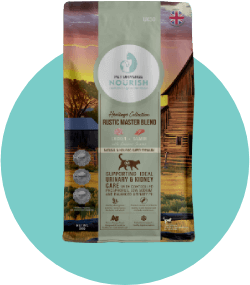
Recommended Food for Kittens: Nourish’s Kitten Growth + Nourishment Stage
Nourish’s Kitten Growth + Nourishment Stage cat food stands out as an excellent choice for your growing kitten. This specially formulated food contains 38% protein and 18% fat, providing the energy-dense nutrition kittens need during their critical development stages.
Fresh chicken serves as the primary ingredient, complemented by dehydrated chicken protein to support muscle development. These high-quality protein sources help your kitten build strong muscles as they grow.
In addition to dry kibble, incorporating wet food into your kitten’s diet can provide additional hydration and ease of chewing.
The formula includes omega-rich salmon oil and sunflower oil that promote healthy skin and a shiny coat. These essential fatty acids also support brain development and overall health during your kitten’s formative months.
Green peas and sweet potatoes provide digestible carbohydrates and fiber to support healthy digestion. The inclusion of dried beet pulp and chicory enhances digestive health further by acting as prebiotics.
Key Benefits:
Formulated specifically for kittens’ developmental needs
High protein content (38%) for muscle growth
Rich in essential fatty acids for brain and coat health
Contains digestible carbohydrates for energy
Meets FEDIAF nutritional standards
Unlike adult cat food, this kitten-specific formula provides the higher calorie and protein content young cats require. Remember that kittens should eat kitten food until they reach one year of age for proper development.
You can feed your kitten Nourish with confidence, knowing it provides complete nutrition tailored to support healthy growth during this important life stage.
Conclusion
Kittens can eat adult cat food occasionally, but it shouldn’t become their regular diet. The nutritional profile in adult formulas lacks the necessary higher protein and calorie content that growing kittens require.
If your kitten has accidentally eaten some adult cat food, don’t panic. A small amount won’t harm them, but continued consumption may affect their growth and development.
The best approach is to feed your kitten specially formulated kitten food until they reach about 12 months of age. This ensures they receive the proper nutrients needed during this critical growth period.
Remember that proper nutrition during the first year sets the foundation for your kitten’s lifelong health. Consult with your veterinarian if you’re unsure about the right feeding schedule or if you need recommendations for high-quality kitten food brands.

 EN
EN
 Fat Bloom Pet Food And How It Impacts Product QualityFat Bloom Pet Food And How It Impacts Product Quality When a thin, whitish ...