You can safely give your dog a small amount of fresh pineapple as a treat, as long as you remove the tough core and spiky skin. This fruit is not toxic to dogs and offers some vitamins and fiber that can support their general health.
Just remember, moderation is key—large amounts or frequent servings can upset your dog’s stomach due to the natural sugar and fiber content. Always start with a few bite-sized pieces and watch for any signs of digestive upset to make sure your dog enjoys pineapple comfortably.
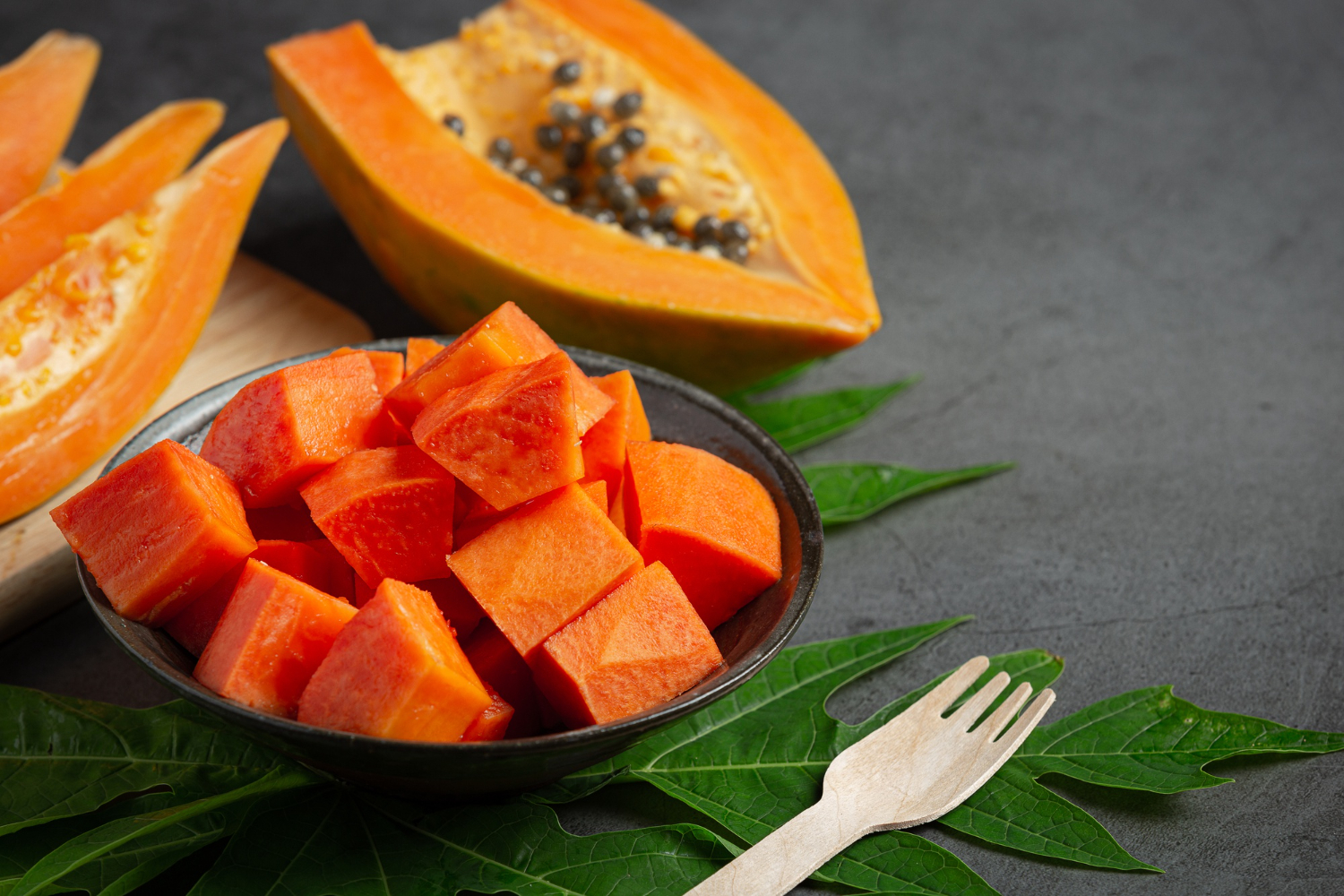
To know more about pet dietary information check out our other article: Can Dog Eat Papayas?
Benefits Of Dogs Eating Pineapple
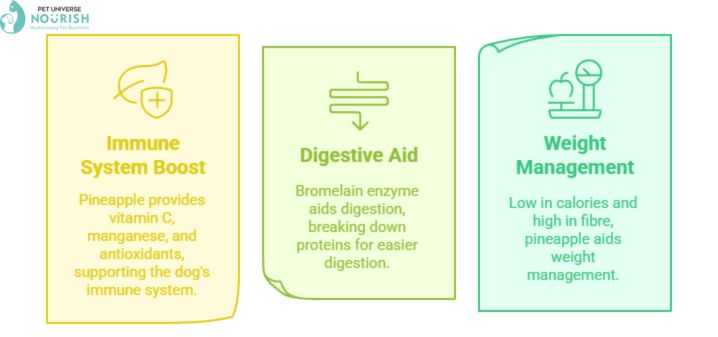
Pineapple gives your dog a natural boost of vitamin C, manganese, and several antioxidants. These nutrients can help support your dog’s immune system and may promote overall vitality.
The bromelain enzyme in pineapple acts as a digestive aid. It helps your dog break down proteins, making meals easier on their digestive tract.
Low in calories, pineapple is a useful snack if your dog needs to manage their weight. Plus, it provides dietary fibre, which can help regulate bowel movements and reduce the chances of constipation.
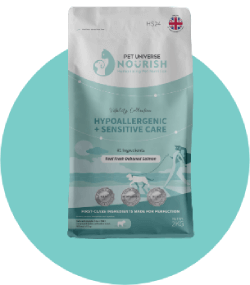
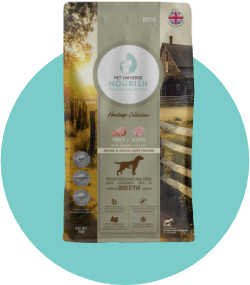
Even so, pineapples are never substitutes for actual dog food. One example of healthy dog foods include grain-free dog food, which can be purchased over at Nourish.
To learn more about its Nourish’s dog food and it’s ingredients, you can head over to our ingredients page:
Possible Hazards And Things To Look Out For When Feeding Your Dogs Pineapple
Natural sugars in pineapple can easily add up, especially if your dog is already on a calorie-controlled diet or has diabetes. Too much sweet fruit might upset your dog’s stomach or even lead to unwanted weight gain. Always keep portions small and treat pineapple as an occasional snack.
Never serve the tough skin or the hard center core to your dog. These parts are difficult to chew and digest, which raises the risk of choking or an intestinal blockage. Only feed your dog the soft, fleshy part of the pineapple.
Some dogs have more sensitive stomachs than others. When you’re offering pineapple for the first time, start with a very small amount and watch for signs of digestive upset like loose stools or vomiting. If any problems occur, it’s best to skip pineapple entirely.
Always monitor your pet after introducing any new treat, including pineapple, to ensure there are no unexpected reactions.
Controlling Consumption: How Much Pineapple Can A Dog Eat?
To keep your dog safe, treat pineapple as a snack, not a regular part of their daily menu. Serving size depends mostly on your dog’s size, as their digestive system can only handle so much sugar and fiber at once.
Give pineapple in bite-sized pieces, and always remove the core and skin, as these parts are hard to digest.
You should only offer pineapple as an occasional treat, making up less than 10% of your dog’s daily calories. Too much can cause stomach upset or diarrhea, especially in smaller breeds.
If your dog is new to pineapple, introduce it slowly and watch for any signs of discomfort, like loose stools or loss of appetite. Dogs with diabetes or sensitive stomachs may need to skip pineapple altogether due to its natural sugars.
Stick to fresh, raw pineapple and avoid canned varieties, which often contain added sugars or preservatives. Always check with your veterinarian if you have concerns about what’s best for your dog’s unique needs.
Knowing The Symptoms: Signs Where A Dog Has Had Too Much Pineapple
When a dog eats more pineapple than it should, one of the first things you might notice is an upset stomach. This usually appears as vomiting, loose stools, or a reluctance to eat. If your dog seems uncomfortable after snacking on pineapple, pay close attention.
Gas and bloating are also common reactions. Your dog may seem restless, pace more than usual, or have a swollen belly. Sometimes you’ll hear noticeable gurgling from their stomach, indicating excess gas.
Keep an eye out for changes in how much your dog drinks or urinates. Eating large amounts of pineapple, which contains natural sugars and water, can lead to increased thirst or more frequent bathroom breaks. This shift is worth noting, especially if it happens suddenly.
Unusual behavior is another sign. If your dog becomes lethargic, shows less interest in play, or seems irritable, it could be related to pineapple intake. Sudden changes in mood or activity can be subtle but important clues.
The table below highlights the main symptoms to watch for:Monitoring your dog for these signs can help you adjust how much pineapple you offer in the future.
Proper Steps To Feed Your Dog Pineapple
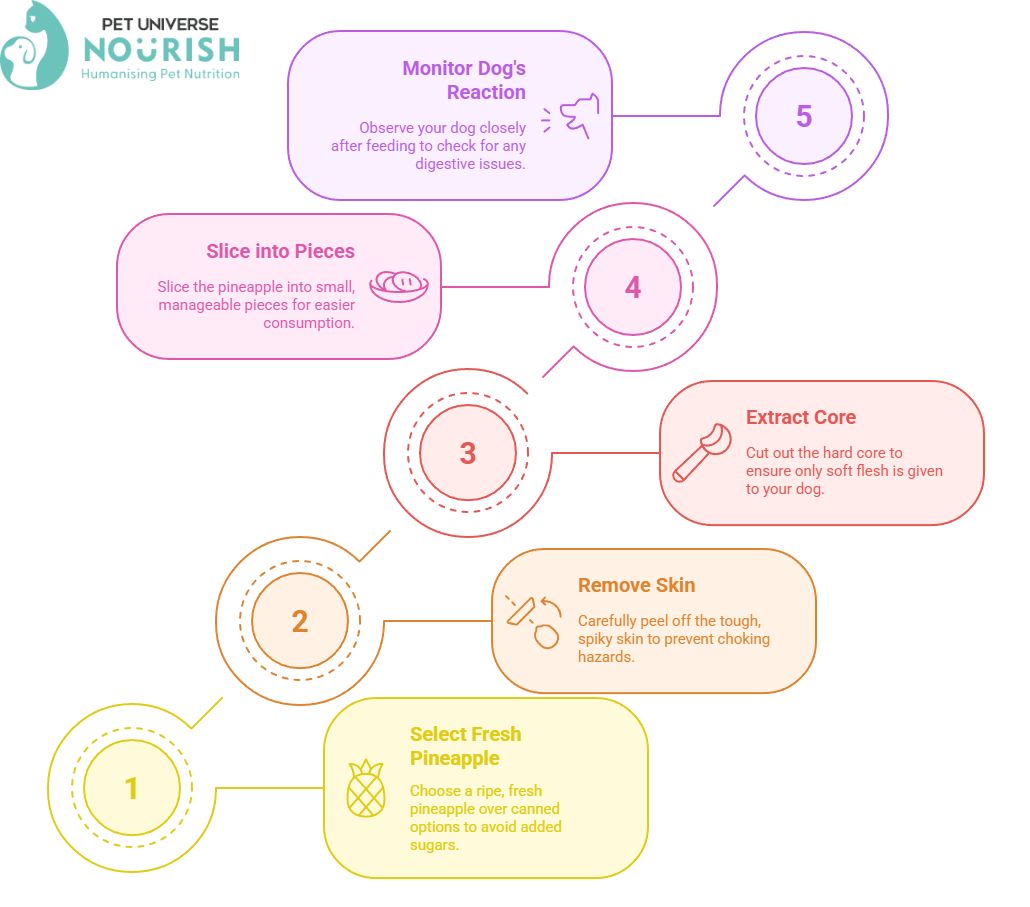
Start by selecting a ripe, fresh pineapple instead of the canned variety. Canned pineapples are often packed with added sugars and syrups, which you should avoid for your dog’s health.
Carefully remove the thick, spiky skin. Pineapple skin is tough and indigestible, and swallowing it can lead to discomfort or even choking for your dog.
Take out the hard core from the center of the fruit. The core is fibrous and poses a risk if swallowed, so make sure only the soft, juicy flesh is given to your pet.
Slice the pineapple into small, bite-sized pieces. Dogs, especially smaller breeds, will find these easier to manage and less likely to choke on.
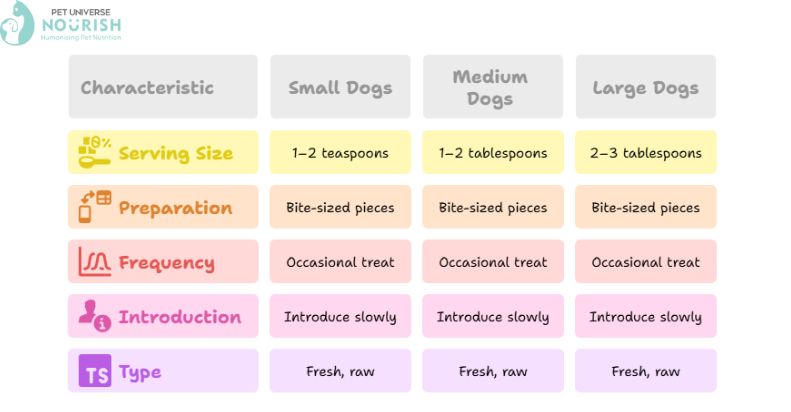
Keep portion sizes appropriate for your dog’s weight. Here’s a quick guideline:When you offer pineapple for the first time, observe your dog closely afterward. If you notice any signs of digestive upset—such as diarrhea or vomiting—hold off on giving more and consult your veterinarian.
Creative Ways to Serve Pineapple to Your Dog
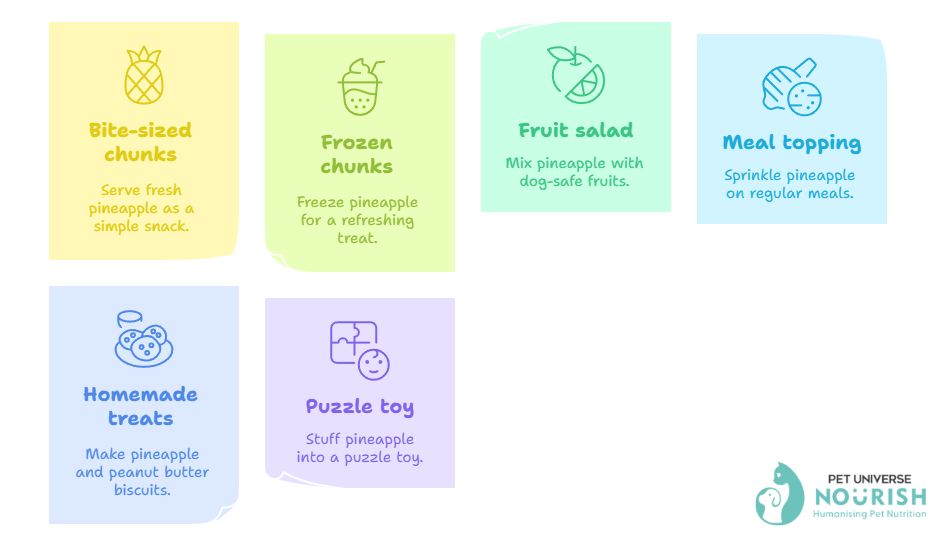
There are plenty of fun and healthy ways to add pineapple to your dog’s treat rotation. Here are some creative ideas to make dog pineapple a special part of your dog’s diet:
Cut fresh pineapple into bite-sized chunks and serve as a simple snack.
Freeze pineapple chunks for a refreshing dog treat on warm days.
Mix pineapple with other dog safe fruits, such as apples or berries, to create a colorful and healthy fruit salad.
Sprinkle pineapple chunks on top of your dog’s regular meals for a burst of flavor and nutrition.
Make homemade dog treats, like pineapple and peanut butter biscuits, for a unique and tasty treat.
Stuff a few pineapple chunks into your dog’s favorite puzzle toy for a fun and rewarding challenge.
Conclusion
No matter how you choose to feed pineapple, always introduce new foods gradually and in small amounts to avoid digestive upset. If you’re ever unsure about which dog treats or dog safe fruits are best for your pet, your veterinarian can offer personalized advice.
For the best pet food options, check out Nourish’s wide collection of premium dog and premium cat food collections.

 EN
EN
 Fat Bloom Pet Food And How It Impacts Product QualityFat Bloom Pet Food And How It Impacts Product Quality When a thin, whitish ...