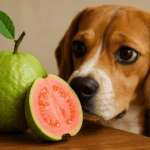
Yes, dogs can safely eat papaya when offered properly. The fruit is generally safe for canine consumption and provides several health benefits including vitamins A, C, and K, along with fiber and beneficial enzymes like papain.
However, moderation is key when feeding papaya to your dog. Too much can cause digestive upset due to its high fiber content.
Papaya can be a nutritious treat for your dog when given in moderation. This tropical fruit packs an impressive array of vitamins A, C, and E that support your pup’s immune system, vision, and skin health.
The digestive enzyme papain found in papaya makes it especially beneficial for canine digestive health. This natural enzyme helps break down proteins and can ease digestion for dogs with sensitive stomachs.
Fiber content in papaya helps regulate your dog’s bowel movements. This can be particularly helpful for dogs prone to constipation, as the fiber promotes healthy and regular digestion.
For pet parents concerned about weight management, papaya offers a tasty low-calorie option. You can replace higher-calorie treats with small pieces of this fruit to help maintain your dog’s healthy weight.
The antioxidants in papaya, including lycopene and lutein, help fight free radicals in your dog’s body. These compounds may contribute to reducing inflammation and supporting cellular health.
Nutritional Value of Papaya for Dogs:
High in vitamins A, C, and E
Contains papain enzyme for digestion
Good source of dietary fiber
Low in calories
Rich in antioxidants
Remember to serve papaya without seeds or skin, as these parts could cause digestive issues. A few small pieces as an occasional treat will allow your furry friend to enjoy the benefits without overdoing it.
Also, if you’re looking for the dog foods with the best nutritional value, do read up on how Nourish’s pet food products from the button below:
Possible Hazards And Things To Look Out For When Feeding Your Dogs Papaya
While papaya can be a healthy treat for your dog, there are some important precautions to be aware of. First and foremost, always remove the seeds before giving papaya to your dog. These seeds can be a serious choking hazard for dogs of any size.
Papaya seeds also contain small amounts of cyanide-like compounds that aren’t safe for canine consumption. Even a few seeds could potentially cause digestive upset or more serious issues in smaller breeds.
Watch out for signs of digestive trouble after introducing papaya to your dog’s diet. The high fiber content in papaya, while normally beneficial, can cause stomach upset, bloating, or diarrhea if your dog eats too much at once.
Moderation is key when it comes to papaya. The natural sugars in this fruit can contribute to weight gain or complicate existing conditions like diabetes if fed in large quantities regularly.
Start small when introducing papaya to your dog. A teaspoon or two for smaller breeds and a few small chunks for larger dogs is plenty to begin with. You can monitor how they react before making it a regular treat.
Warning Signs to Watch For:
Vomiting or diarrhea after eating papaya
Excessive gas or bloating
Signs of an allergic reaction (itching, hives, swelling)
Lethargy or unusual behavior
Remember that treats like papaya should make up no more than 10% of your dog’s daily caloric intake. Even healthy treats need to be balanced with their regular diet to maintain proper nutrition.
Controlling Consumption: How Much Papaya Can A Dog Eat?
Papaya can be a healthy treat for your dog when served properly and in appropriate amounts. The key word here is moderation.
Dogs should only have papaya as an occasional treat, not as a regular part of their diet. Too much papaya can cause digestive upset due to its high fiber content.
The right serving size depends on your dog’s weight and size. For small dogs (under 20 pounds), offer just 1-2 small pieces, equivalent to about 1-2 tablespoons of papaya.
Medium-sized dogs (20-50 pounds) can safely enjoy 2-3 small pieces or approximately 2-3 tablespoons of the fruit.
Large dogs (over 50 pounds) may have 3-4 small pieces, roughly 3-4 tablespoons of papaya.
Remember to make papaya just 10% of your dog’s daily caloric intake. The other 90% should come from their regular dog food to maintain balanced nutrition.
Watch for any signs of digestive upset when introducing papaya to your dog’s diet. Some dogs may have sensitive stomachs and react differently to new foods.
Always remove the seeds and skin before feeding papaya to your dog. The seeds contain trace amounts of cyanide, and the skin is difficult to digest.
If your dog has diabetes or weight issues, consult with your veterinarian before adding papaya to their diet. The natural sugars in papaya might affect their health condition.
Knowing The Symptoms: Signs Where A Dog Has Had Too Much Papaya
Feeding your dog papaya can be a healthy treat, but too much of this sweet fruit may cause some digestive issues. Monitoring your pet after they consume papaya is important to ensure they’re tolerating it well. Look out for these warning signs that might indicate your furry friend has had more papaya than their system can handle.
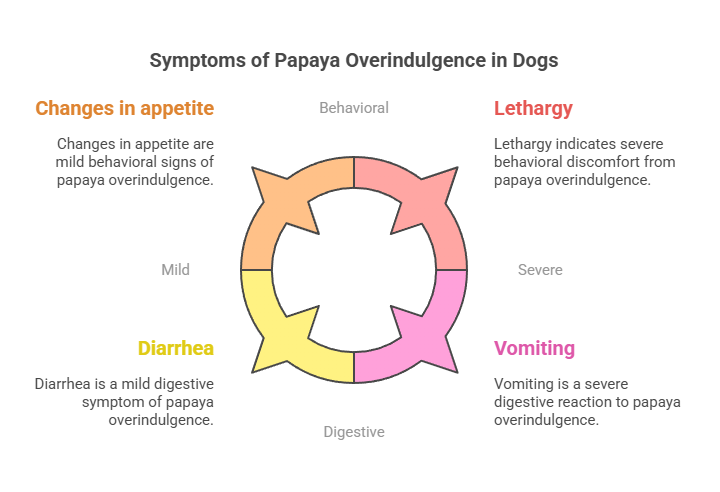
Diarrhea is one of the most common indicators of papaya overindulgence. The high fiber content in papaya can overwhelm your dog’s digestive system, leading to loose or watery stools. You might notice more frequent bathroom breaks or accidents in the house if your dog’s stomach is upset from too much of this tropical fruit.
Vomiting signals that your dog’s body is trying to expel something that isn’t agreeing with it. If you see your dog throwing up within a few hours after eating papaya, they may have consumed too much. Some dogs might retch or show signs of nausea before actually vomiting.
Lethargy and discomfort can manifest as unusual quietness or your dog seeming “off.” Your normally active pup might suddenly show less interest in play, prefer to lie down, or whimper when their stomach area is touched. These behavior changes often indicate digestive discomfort from too much sugar or fiber.
Changes in appetite are worth paying attention to after papaya consumption. Your dog might refuse their regular food or show decreased interest in eating. Alternatively, some dogs might frantically search for water due to the sugar content in papaya causing increased thirst.
If you notice any of these symptoms persisting for more than 24 hours, it’s best to consult your veterinarian. Most mild reactions to papaya overconsumption will resolve on their own as the fruit passes through your dog’s system.
Proper Steps To Feed Your Dog Papaya
Ready to share some tropical fruit with your furry friend? Feeding papaya to your dog can be a healthy treat when done correctly. Here’s how to do it safely and effectively.
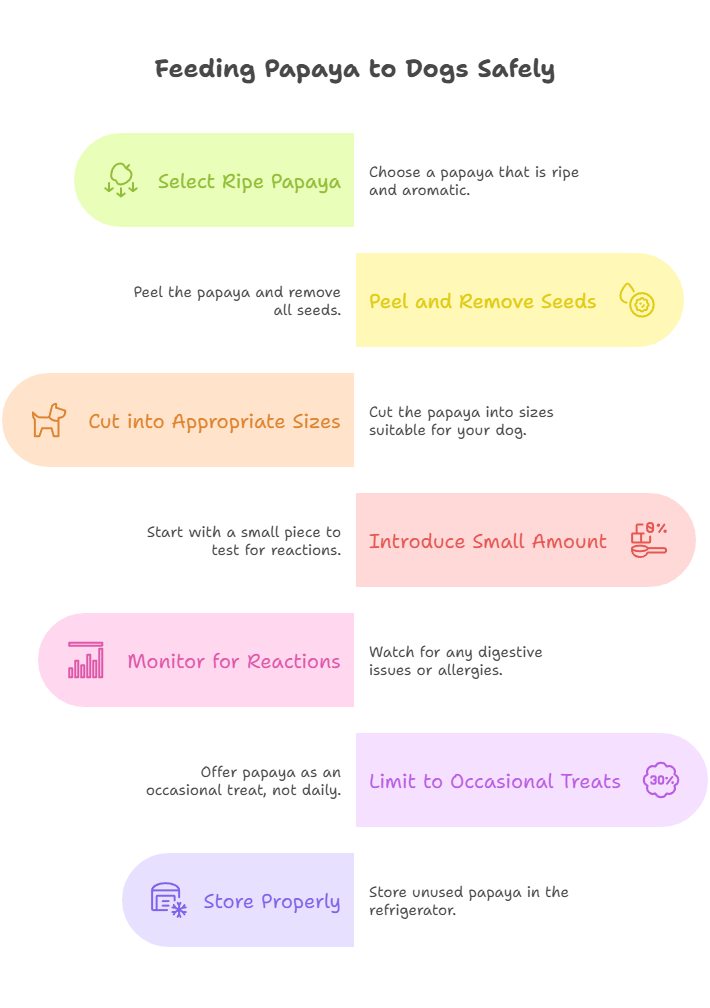
First, select a ripe papaya that yields slightly to pressure when squeezed. Ripe papayas have a sweet aroma and yellow-orange skin with hints of green. This ensures maximum nutritional value and a sweeter taste that your dog will enjoy.
Always peel the papaya completely before offering it to your dog. The skin is tough and difficult for dogs to digest, potentially causing stomach upset. Remove all seeds too, as they contain traces of cyanide and pose a choking hazard.
Cut the papaya flesh into appropriately sized pieces based on your dog’s size. Small dogs need tiny, bite-sized cubes, while medium to large breeds can handle slightly larger chunks. This prevents choking and makes the fruit easier to eat.
When introducing papaya for the first time, start with just a small piece or two. Watch your dog for 24 hours to ensure they don’t experience any digestive issues or allergic reactions. Not all dogs will react the same way to new foods.
Limit papaya treats to occasional offerings, not daily snacks. Too much papaya can cause loose stools due to its fiber content. A good rule of thumb is to keep fruit treats under 10% of your dog’s daily food intake.
Store any unused papaya in an airtight container in the refrigerator for up to two days. Fresh is always best when it comes to feeding fruits to your pet. Discard any pieces that become slimy or discolored.

 EN
EN
 Fat Bloom Pet Food And How It Impacts Product QualityFat Bloom Pet Food And How It Impacts Product Quality When a thin, whitish ...