You can safely feed your dog mango as an occasional treat if you remove both the skin and the pit. The soft inner flesh is non-toxic for dogs and contains vitamins and antioxidants that support overall health.
Like many fruits, mango should only be offered in moderation since it is high in sugar and fiber. Always start with a few small pieces and monitor your dog for any digestive discomfort or unusual reactions.
Quick note: Know that treats and fruits are definitely not substitutes for actual dog food. Made from the best, be sure to check what our ingredients are from the button below:
Is Mango Good for Dogs: Health Benefits for Dogs Eating Mangoes
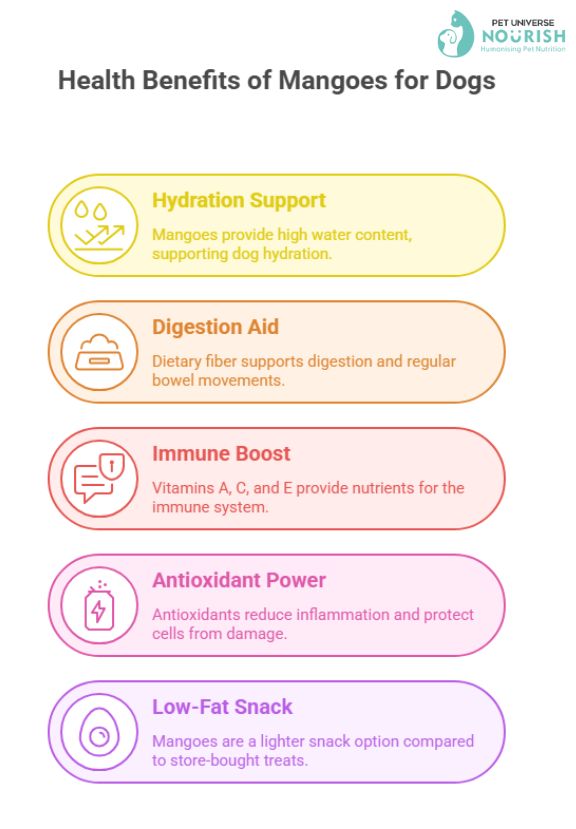
When given in moderation, mango can be a healthy treat for your dog. Its naturally high water content provides a refreshing way to support your dog’s hydration—this is especially noticeable if you offer it as frozen cubes on a hot day.
Mango contributes dietary fiber, which can support your dog’s digestion and help keep their bowel movements regular. A bit of fiber also makes your dog feel full, aiding in healthy weight control by reducing the urge to overeat.
Loaded with vitamins A, C, and E, mango brings important nutrients for your dog’s immune system. These vitamins also help maintain sharp eyesight and keep their skin and coat looking healthy.
Antioxidants in mango are known to reduce inflammation and protect cells from damage by free radicals. This benefit may play a role in supporting long-term wellness as your dog ages.
Because mango is naturally low in fat, it’s a lighter snack option compared to many store-bought treats. By serving mango in small, safe portions, you can add variety to your dog’s diet without overloading on calories.
Is Mango Bad for Dogs: Potential Health Hazards for Dogs Eating Mangoes
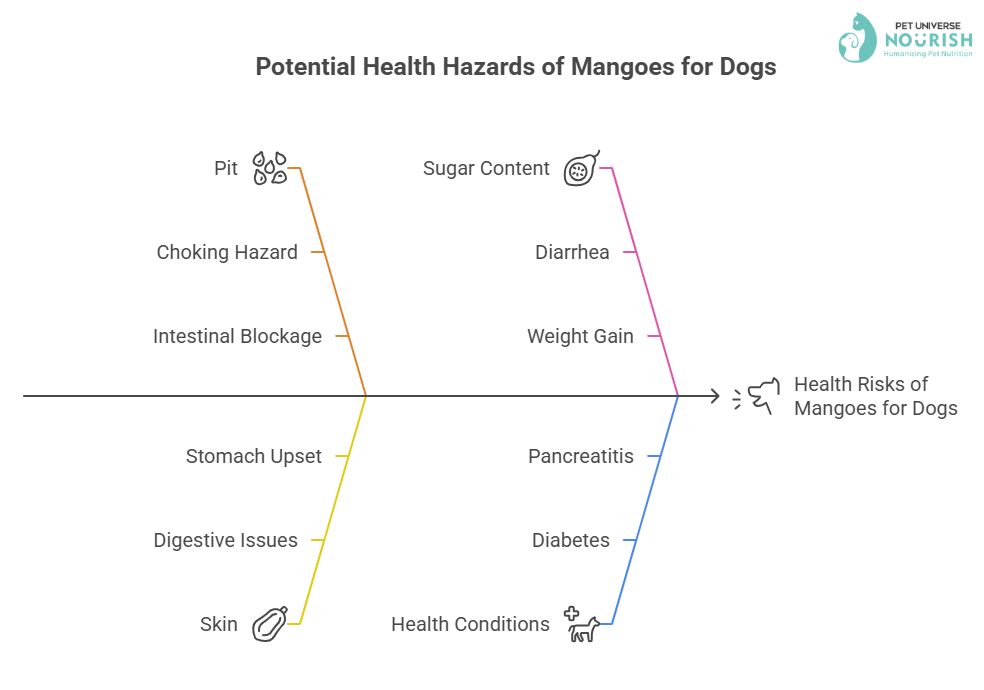
The pit of a mango is a serious risk for dogs. Because it is large and firm, your dog could choke or face an intestinal blockage if they swallow it. Always remove the pit before serving mango to your pet.
Mango skin is not easy for dogs to digest. Feeding your dog mango with the skin on might cause stomach upset or discomfort, so peeling is the best option.
Mango is sweet, and naturally high in sugar. While a small bite occasionally is fine, eating too much can result in diarrhea, an upset stomach, or weight gain.
Dogs, just like people, can have sensitivities. Some may develop digestive problems such as vomiting or diarrhea after trying mango for the first time. Start with small pieces and monitor your dog for any bad reactions.
Health conditions in your dog should be considered before you offer any fruit. Dogs with diabetes or pancreatitis, for example, might need to avoid mango altogether due to its sugar content. Speak with your vet if you are unsure whether mango is a safe choice for your pet.
Overconsumption: Possible Side Effects of Dogs Eating Too Much Mangoes
Feeding your dog too much mango can cause digestive issues. Loose stools or diarrhoea are common because mango contains a lot of fiber and natural sugars. Some dogs may struggle to handle these, especially if they aren’t used to eating fruit.
Vomiting is another reaction you might see if your dog eats more mango than their stomach can handle. In some cases, your dog may throw up soon after indulging in too much fruit as their body tries to restore balance.
Bloating, stomach discomfort, or trouble passing stools are also possible. Your dog could seem uneasy, have extra gas, or simply not act like themselves for several hours.
Your dog may seem less energetic if they’ve overeaten mango. Excess natural sugar from the fruit can sometimes have the opposite effect of giving energy, causing lethargy instead.
A dog that eats too much mango might drink more water than usual. If you notice your dog panting or heading to their water bowl far more often after a fruity snack, that’s a sign you should scale back on the mango portions.
Frequency Level: How Often Can I Feed My Dogs Mangoes?
Mangoes can be a sweet treat for your dog, but moderation is key. You should not offer mango daily, regardless of your dog’s size.
For small breeds, mango should be considered a rare treat. Feeding once a week or less is the safest approach to prevent excess sugar and calorie intake.
Medium to large dogs can handle mango a bit more often—up to two or three times per week is usually reasonable. Portion size matters just as much as frequency; a few small pieces are plenty for one serving.
To make things simple, here’s a quick reference: Always treat mango like a dessert, not a main part of your dog’s diet. Treats in total—including fruit—should make up no more than 10% of your dog’s daily calories.
Watch out for any signs of upset stomach or allergies the first few times you introduce mango. Make sure you serve mango without skin or pit, chopped into pieces that are easy for your dog to chew and swallow.
Steps to Feed Your Dog Mangoes
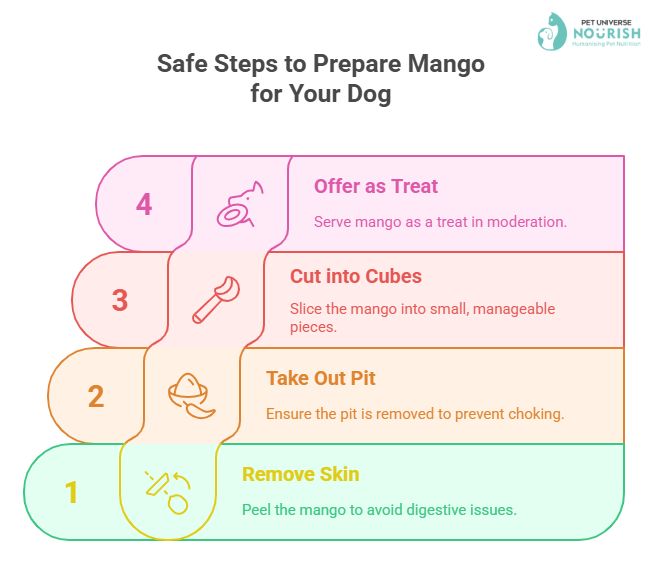
Start by removing the skin of the mango. The peel can be tough for dogs to digest and might upset their stomach, so only use the soft, fleshy part of the fruit.
Next, take out the pit. Mango pits are large, hard, and can cause choking or intestinal blockages in dogs. Ensure you’ve discarded the pit completely before preparing the fruit for your pet.
Cut the peeled mango into small, bite-sized cubes. If you have a smaller dog, one or two small chunks are enough, while medium or large dogs can have a few more. Keep the pieces manageable to reduce the risk of choking.
Offer mango as a treat rather than a regular meal. Limit servings to a few pieces once or twice a week, since mango contains natural sugars and plenty of fiber.
Begin by giving your dog a small amount of mango at first. Watch for signs of digestive upset, such as vomiting, diarrhea, or itching. If your dog reacts negatively, stop offering mango and consult your veterinarian.
Frequently Asked Questions About Can Dogs Eat Mango
1. Can Dogs Eat Mango Seeds?
You should never give mango seeds to your dog, as the large pit in the center can easily become a choking hazard. Swallowing the seed may also block your dog’s digestive tract, which is a serious risk.
The best way to serve mango is by removing all seeds and only offering the soft flesh. Keeping the seed out of reach helps protect your dog from unnecessary health issues and ensures snack time is both safe and enjoyable.
2. What Are Some Alternate Ways to Feed Dogs Mango?
You can give your dog mango by serving it fresh in small, bite-sized cubes or by mashing it to mix into their regular meal for added texture and flavor. Freezing chunks of mango or stuffing a dog-safe toy with mashed mango creates a cool, soothing treat on hot days.
Blending mango with other dog-friendly fruits and a spoonful of plain, sugar-free yogurt results in a creamy smoothie your dog may enjoy. Any chosen method should always leave out the peel and pit, serving only ripe, soft fruit in healthy portions.
3. Can Dogs Eat Dried Mango?
You can give your dog dried mango in small amounts if it’s prepared at home, because it usually contains fewer additives. Keep the pieces tiny, since drying the fruit condenses the sugar and calorie content.
Store-bought dried mango is not a good choice for dogs, as it often includes extra sugar and preservatives. Always read the ingredient list and avoid anything with added sweeteners or artificial substan

 EN
EN
 Fat Bloom Pet Food And How It Impacts Product QualityFat Bloom Pet Food And How It Impacts Product Quality When a thin, whitish ...