You can feed your cat a small piece of plain, fully-baked bread on occasion. It’s safe as a rare treat, as long as the bread does not contain toxic ingredients like garlic, onions, raisins, or artificial sweeteners.
Bread offers little value to your cat’s diet since they thrive on protein, not carbohydrates. If your cat does sneak a crumb, though, you generally don’t need to worry—just be sure it’s a very small amount and not something you offer regularly.
And we have to remind readers that while treats and unorthodox food for cats like bread might pose no serious harm, it can never be a substitute for actual cat food.
Nourish’s cat food are derived from the best ingredients which you can learn more from the button below:
Is Bread Good For Cats: Health Benefits For Cats Eating Bread
You can give your cat a small piece of plain bread occasionally without worrying about toxicity, but it won’t serve any real health purpose. Cats rely on animal-based proteins and essential nutrients that bread simply does not provide.
Bread does not contain the protein, taurine, or critical vitamins that support your cat’s health and energy levels. Feeding bread won’t hurt your cat in moderation, yet it offers almost no nutritional benefit.
Is Bread Bad For Cats: Potential Health Hazards For Cats Eating Bread
Feeding your cat a small piece of plain bread isn’t likely to cause any immediate harm. Bread is not toxic to cats, and most felines can tolerate a tiny amount as an occasional treat. However, there are a few health considerations you should not overlook.
Nutritional Gaps: Bread provides very few nutrients that your cat actually needs. Cats are obligate carnivores—that is, they require animal-based proteins and specific nutrients like taurine found in meat. Eating bread may fill your cat up but won’t help meet its essential dietary requirements.
Carbohydrate Content: Unlike people or dogs, cats aren’t built to process a lot of carbohydrates. Bread is high in carbs and low in protein, which does not align with a cat’s natural diet. Too many carbs can stress your cat’s metabolism and may eventually contribute to weight issues.
Risk of Overeating: A single slice of bread can contain a large portion of your cat’s daily calorie needs. Overindulging—even once or twice—might tip your cat into consuming more calories than it can burn, leading to gradual weight gain. Indoor or less active cats are especially at risk.
Dangerous Flavors and Additives: Avoid bread varieties containing garlic, onion, raisins, or artificial sweeteners. These ingredients are toxic to cats and, even in small amounts, can cause serious health problems such as anemia or kidney failure. Always check the ingredient list before offering any bread.
Overconsumption: Possible Side Effects Of Cats Eating Too Much Bread
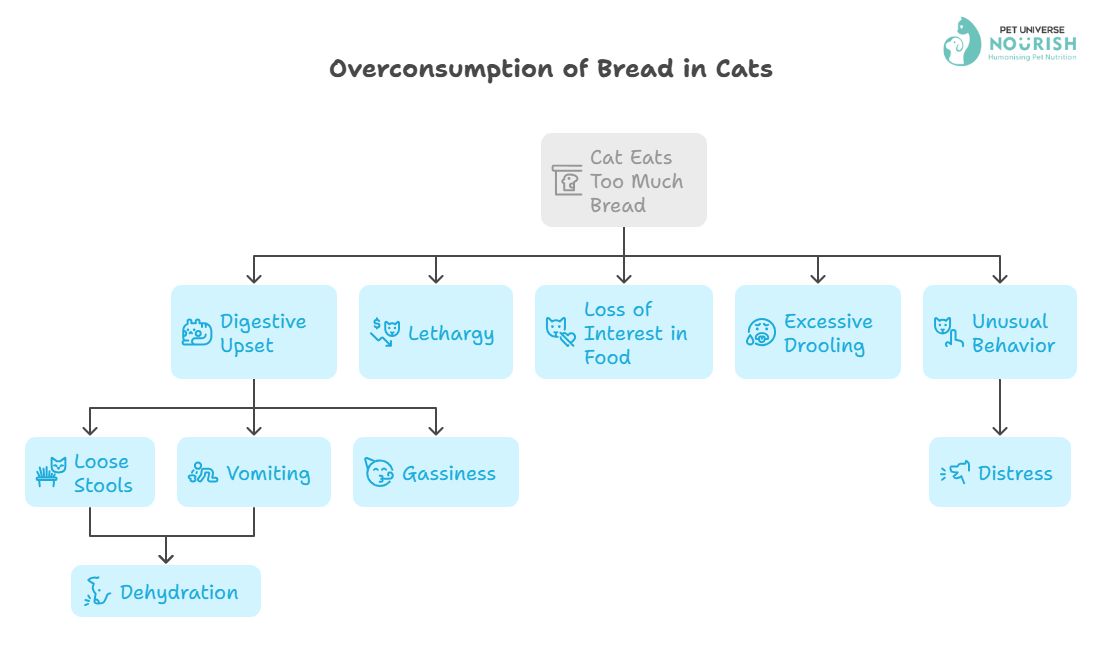
Feeding your cat too much bread can quickly upset their digestion. You might notice loose stools, vomiting, or even gassiness if raw dough was eaten. If your cat’s gut isn’t happy, it rarely goes unnoticed.
Lethargy is another red flag. If your cat suddenly seems sluggish and uninterested, it may be dealing with abdominal discomfort.
It’s common for cats to lose interest in food when they’re bloated or queasy. You might see your pet walk away from their favorite meals, which usually signals they’re not feeling well.
Excessive drooling can occur if your cat feels nauseous. Watch for increased saliva, as it’s often a sign your pet’s tummy is unsettled.
When vomiting or diarrhea strike, dehydration can follow. Signs like dry gums or loss of skin “snap-back” deserve prompt attention.
Unusual or restless behavior, such as pacing, hiding, or persistent meowing, may hint that your cat is in distress. These behavioral shifts are important clues that your cat needs help.
Frequency Level: How Often Can I Feed My Cats Bread?
You should treat bread as an occasional treat for your cat, not a regular part of their diet. Offering a tiny piece—no bigger than a fingernail—once a month is enough to avoid any nutritional imbalances or digestive issues.
Giving bread more often can lead to unnecessary calories and lacks the nutrients cats actually need. Stick to this minimal frequency, and always use plain bread without any added ingredients like garlic or raisins, which can be harmful.
Smart Ways To Keep Your Cats Away From Bread
Keep your bread in a secure, cat-proof container such as a heavy bread box or a cupboard with a latch. Cats are clever, so standard plastic bags are often not enough. A sturdy storage spot prevents both sneaky paws and accidental nibbles.
Physical deterrents can be very effective. Place aluminium foil or double-sided tape on kitchen counters—most cats dislike the feel enough to stay away. Giving your cat a dedicated perch or cat tree near the kitchen can also redirect their curiosity.
If your cat stalks the bread or shows too much interest, offer a safe cat treat instead. Rewarding them for good behavior with tasty alternatives encourages them to ignore the bread over time. This way, your cat learns that there are better rewards on offer.
A bored cat is a curious cat. Make use of interactive toys or regular play sessions to keep their minds occupied. A busy, entertained cat is far less likely to seek out off-limits foods.
Consistent and calm training makes a difference. Each time your cat attempts to go for the bread, respond with a firm “no” or a quick hand clap. Over time, your cat will recognize these cues and learn what is not allowed.
Frequently Asked Questions About Can Cats Eat Bread
1. My Cat Ate Bread. What Do I Do?
If your cat has munched on a small piece of plain white or wheat bread, there is generally no need to panic—most healthy cats tolerate a small amount without any problems. Simply watch your cat for a few hours to make sure there’s no vomiting, diarrhea, or changes in behavior.
You should be more cautious if your cat has specific health issues like diabetes or pancreatitis, as even small amounts of bread could affect their condition. If your cat seems unwell or you notice any concerning symptoms, contact your veterinarian for guidance.
2. Why Does My Cat Love Eating Bread?
Your cat may be attracted to bread because of its appealing aroma or unique texture, which can spark curiosity and a desire for a taste. It’s also possible that the starchy flavor and soft consistency remind your cat of other occasional treats or human foods they’ve enjoyed before.
Some cats simply find the smell of yeast in bread irresistible, while others may ignore it completely. If your cat tends to beg for a bite, it usually comes down to basic preferences rather than an actual nutritional need.

 EN
EN
 Fat Bloom Pet Food And How It Impacts Product QualityFat Bloom Pet Food And How It Impacts Product Quality When a thin, whitish ...